
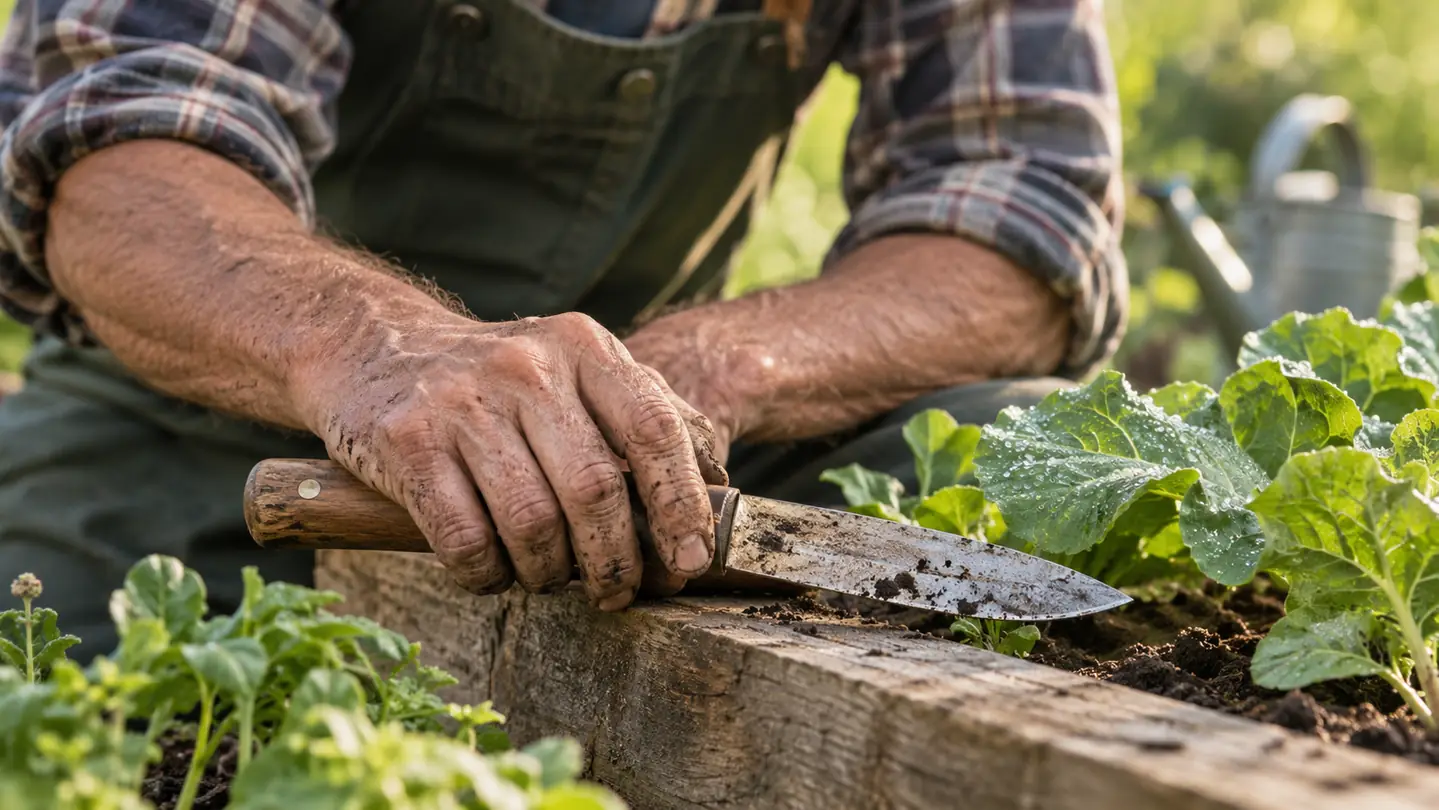
I am going to tell you something that most reviews of the Nisaku hori hori will not. I have used this knife nearly every gardening day for about four years, and I still reach for it more than any other hand tool I own. But it is not the perfect tool, it will not replace every other tool in your shed, and if you buy it expecting one thing to do all of your garden work, you will be disappointed. Here is what I have learned, including the parts I wish someone had told me before I bought mine.
The Nisaku NJP650 is a Japanese weeding knife with a 7.25 inch stainless steel blade, a wooden handle, and inch markings along the steel. It is made in Japan, which matters more to me than I expected. The steel is the real thing, the edge holds, and the tool has survived four years of rocky red clay, raised bed soil, and the occasional drop onto concrete. I bought it to replace a trowel and a cheap weeder that bent, and it did that. What nobody tells you is how many other jobs it quietly takes over.
The Quick Verdict
The Nisaku hori hori is the best everyday hand tool I own for weeding, dividing, transplanting and measuring depth, but it is not a digging bar, not a shovel, and not the answer for a bad back on a big digging day. Buy it for what it is, not for what the internet says it can do.
Amazon Check Today's Price →The one hand tool I reach for first, four years running
If you garden in raised beds or fight weeds in open ground, the Nisaku hori hori earns its place on your peg rack. It weeds, divides, transplants, measures depth and cuts through roots that would bend a trowel.
Amazon Check Today's Price on Amazon →How I've Used It
My name is Hazel Whitford. I am 61, I have gardened organically for about 20 years on a half-acre lot in the Arkansas Ozarks, and my garden runs on raised beds because the native soil is rocky red clay. I have three galvanized beds, a patch of open ground that I am slowly improving, and a compost system that keeps my soil alive. The Nisaku hori hori has been my everyday hand tool for about four years. It replaced a trowel and a cheap weeder that bent the first season.
I use it for weeding, which is the job it is named for. I use it for dividing perennials, transplanting seedlings, and measuring planting depth with the inch markings on the blade. I use the serrated edge to cut through stubborn roots and the straight edge for clean slicing. I have also used it for things the manufacturer probably never imagined, like scoring the soil before I sow a row of beans and prying up a stubborn zinnia clump. The honest part is that it does most of these jobs very well. The other honest part is that it has limits, and I hit them every year.
One morning last April stands out because it showed me what this tool is actually for. The lettuce and kale were up, the soil in the raised beds was still cool, and a wet week had given the weeds a head start. I went out before breakfast with the Nisaku, worked down each bed row by row, and had all three beds clean in about forty minutes. What stayed with me was not the speed but how little the work hurt. With my old trowel, forty minutes of weeding left my hands stiff and my wrist complaining. With this knife, I came inside and poured a second cup of coffee without thinking about it. That is the difference a light, sharp tool makes when you have arthritis in your hands. It is also why I stopped reaching for the trowel entirely.
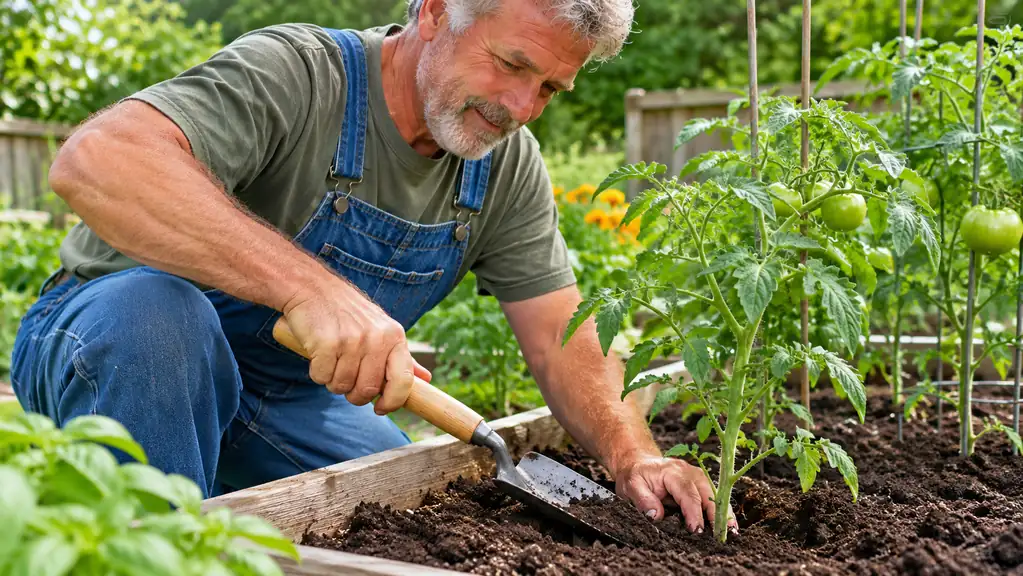
What Nobody Tells You Before You Buy
The first thing nobody tells you is that the Nisaku hori hori is not a digging bar. The blade is 7.25 inches of stainless steel, and the whole tool weighs about 10 ounces. That is light. When you see people online chopping through hard-packed clay and prying up rocks with it, you are watching a tool being used at the very edge of its design. I have done it too, and it works, but it is hard on the handle and hard on your hands. For real digging, I still reach for a full-size shovel and let my husband Dale handle the worst of it. My lower back thanks me.
The second thing nobody tells you is that the wooden handle gets slippery when your hands are damp. I garden early in the morning, often while the dew is still on everything, and I have had the knife shift in my grip more times than I can count. The ergonomic handle helps, but it is still smooth wood. A little dirt on your palms actually improves the grip, which is a backwards thing to discover. I have never dropped it badly, but I have come close.
Here is a specific moment from last June. After a rain, I went out to pull pigweed from the bed nearest the kitchen door. My hands were damp, the handle was slick, and on the third or fourth pull the knife twisted in my grip and came down edge-first into the soil, missing my thumb by maybe two inches. Nothing was hurt except my pride, but it was a real reminder that smooth wood and wet hands do not mix. I keep a small towel on the bed edge now, and I rub a little dry soil into my palms before I start. I have not had a close call since. It is the kind of lesson you only learn once, and I am glad I learned it with a knife blade in the dirt instead of in my hand. Dale still teases me about it, and I let him, because he was right that I should have wiped the handle off first.
The third thing is the sheath. The Nisaku comes with a faux leather sheath, and it does its job. It protects the edge and keeps the knife from poking through a tool bag. But the fit is snug, and getting the knife back in with one hand takes practice. I keep mine on a peg rack by the back door, and I have learned to slide the blade in slowly at an angle. This is a small thing, but it is the kind of small thing that nobody mentions and then you stand there feeling foolish.
The fourth thing is the one I wish someone had told me years ago. The Nisaku hori hori is a precision tool, not a brute force tool. It excels at shallow, careful work: slipping under a dandelion root, slicing a taproot, lifting a transplant without tearing it. It is not the tool for breaking new ground. When I see reviews that claim it does everything, I think those reviewers have not tried to break new ground in Ozarks clay with it. I have. It is a good tool doing a job it was never meant to do.
The Nisaku hori hori is a precision tool, not a brute force tool. It excels at shallow, careful work: slipping under a root, lifting a transplant without tearing it. It is not the tool for breaking new ground.
The Strengths, Honestly Stated
The steel is the first strength. Nisaku builds this knife from stainless steel, and after four years of use, including being left in a raised bed overnight in the rain once, I have not seen rust. The edge holds longer than any other garden edge I have owned. I sharpen it once or twice a season with a file, and that is it. The straight back edge gives a clean cut, and the serrated edge grips roots instead of sliding off them. That combination is the reason I reach for this knife instead of my old trowel.
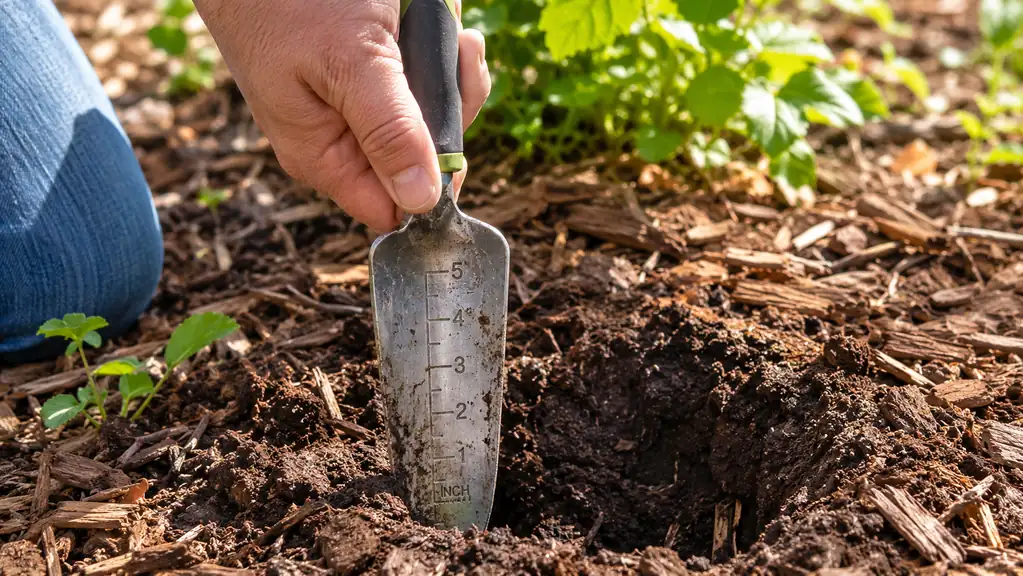
The inch markings are the second strength, and they are the feature I underestimated the most. I plant bulbs and transplants at the depth the seed packet calls for, and the markings on the blade let me check the depth without guessing. I have also used the blade as a quick ruler for spacing. It is a small thing, but in a garden where I am always planting something, it saves me trips back to the shed for a tape measure.
The serrated edge earned its keep one September when I divided a clump of daylilies that had been in the ground for six years. The root mass was dense and wiry, and my old weeder had bent the previous spring. I worked the serrated edge down through the crown, sawing gently, and the knife cut through roots that had defeated the trowel. The whole division took maybe fifteen minutes. The inch markings earned their keep the same fall when I planted forty tulip bulbs along the front of the zinnia strip. The package said six inches deep, and I checked every hole against the blade markings instead of guessing. Every bulb came up the following spring. That is the kind of quiet usefulness that does not show up in a review. It is the difference between planting by guess and planting by measure, and after twenty years of gardening I will take measure every time.
The weight is the third strength. At about 10 ounces, the Nisaku hori hori is light enough to use all morning without tiring my hands, which matters to me because I have mild arthritis. I can weed a whole raised bed without my hands cramping the way they did with a heavier tool. For a gardener with hand or wrist trouble, that light weight is the difference between weeding and not weeding.
The Shortcomings, Also Honestly Stated
The handle is the biggest shortcoming. The wood is comfortable and the ergonomic shape helps, but it is slippery when damp, as I said, and it is also not sealed the way I would like. After four years, mine has a few small checks in the wood near the blade collar. I treat it with linseed oil once a year and it has not gotten worse, but it is something to know. If you garden where it rains a lot, plan to oil the handle or wrap it.
The blade is not for heavy prying. I bent the tip slightly one fall trying to pry out a buried rock, and I had to file it back. That was my fault, not the tool's, but it tells you the limit. The steel is hard enough to hold an edge, which also means it is a little brittle at the tip if you abuse it. Use it like a knife, not a crowbar.
The sheath, as I mentioned, is snug. It also has a belt loop that I never use. I prefer a peg rack, and the knife hangs neatly by its handle. If you plan to carry it on your belt all day, the included sheath works, but it is not the quick-draw experience some reviews suggest.
What I Liked
- Serrated and straight edges on one blade handle roots, slicing and clean cuts
- Inch markings on the steel make planting depth and spacing easy to check
- Light at about 10 ounces, easy on arthritic hands for a full morning of weeding
- Stainless steel blade holds an edge and has not rusted in four years of use
- Made in Japan, with a 2 year manufacturer warranty
Where It Falls Short
- Wooden handle is slippery when damp and needs yearly oiling
- Tip will bend if you pry at rocks; it is a knife, not a crowbar
- Faux leather sheath is snug and takes two hands to seat
- Not a digging tool; heavy ground work still needs a shovel or digging bar
How It Performed Over Four Years
I bought my Nisaku hori hori about four years ago, and I can trace my gardening history through the marks on its blade. Year one, I used it mostly for weeds and was impressed. Year two, I fought an overgrown mint patch that was trying to take over a corner of the garden, and the serrated edge cut through the runners that had defeated my old weeder. Year three, I used it for every transplant in the spring and every bulb in the fall. Year four, I realized I reach for it more than any other hand tool I own, and that I have replaced the trowel entirely.
The only maintenance I have done is sharpening once or twice a season, oiling the handle once a year, and washing the blade after digging in soil that might have disease. I have not had to replace the sheath, and I have not had to replace the handle. For a tool that costs what this one costs, that kind of service life is the real value. The 2 year manufacturer warranty is a bonus, but I have not needed it.
I can date the low point too. Two falls ago, I tried to pry a walnut-sized rock out of the open-ground patch with the tip of the blade, and I felt it give before I heard it. The tip had bent maybe an eighth of an inch. I filed it back flat that afternoon, and it has held ever since, but I learned the limit the hard way. The other lesson came last winter, when I left the knife in the bed overnight during a cold rain. I expected rust. There was none, just a dull film that wiped off. That is when I stopped worrying about the steel and started worrying only about the wood. Four years in, the knife still feels like the same tool I bought, and the blade still takes a file the same way it did on day one. That is the kind of quiet durability I want from a tool I reach for every single day.
Who This Is For
The Nisaku hori hori is for the home gardener who does their own weeding, planting, dividing and transplanting, and who wants one good tool instead of three mediocre ones. It is for raised bed gardeners who need a tool that works in confined spaces. It is for anyone with hand or wrist trouble who needs a light tool that does not fight back. It is for the gardener who plants bulbs and wants to get the depth right the first time.
Who Should Skip It
Skip the Nisaku hori hori if your main job is breaking new ground, digging post holes, or moving serious soil. That is shovel and digging bar work, and no weeding knife replaces them. Skip it if you want a tool you can abuse without thought, because the wooden handle and the steel tip both have limits. Skip it if you prefer one tool that does everything, because this one does its jobs well and leaves the heavy work to others. And if you garden in wet conditions and hate maintaining wood, the handle will ask more of you than you may want to give.
Buy the Nisaku for the work it actually does best
Weeding, dividing, transplanting and measuring depth: that is where the Nisaku hori hori earns its place on your peg rack. Four years in, mine is still the first hand tool I reach for.
Amazon Check Today's Price on Amazon →