If you garden in the same rocky red clay I do, you know the feeling of a trowel that bends on the first good push and a weeder that snaps off in the ground. I put up with both for years because I thought that was just how gardening was. Then a friend who had lived in Japan handed me her Nisaku hori hori and told me to try it once. I ordered my own that same week, and four years later it is still the first tool I reach for when I walk out to the garden.
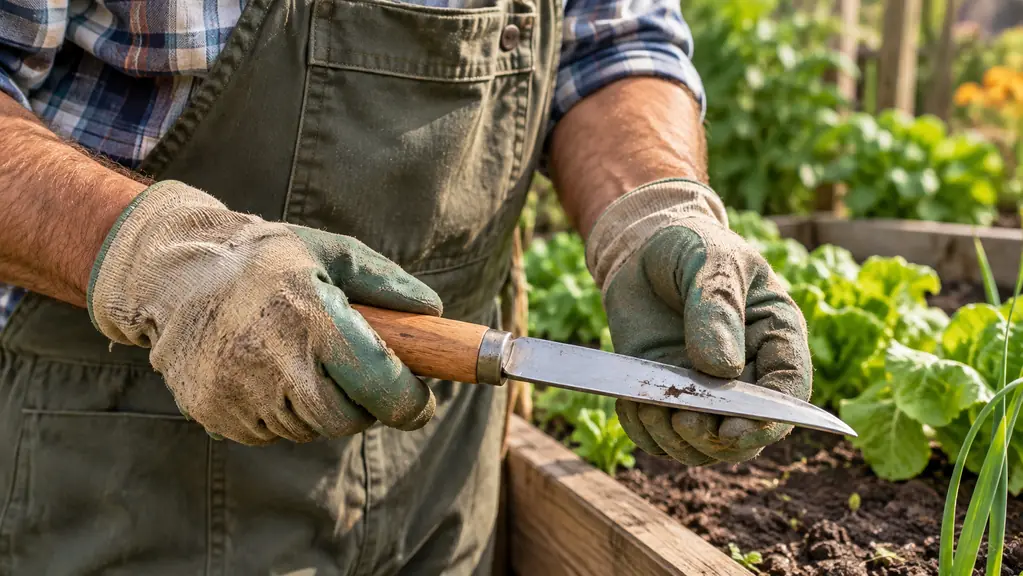
A hori hori is a Japanese soil knife, and the Nisaku NJP650 is the one most gardeners mean when they say the name. It has a 7.25 inch stainless steel blade, a wooden handle, and a simple design that has not needed to change because it got the job right the first time. Here are the ten reasons I would not garden without mine.
The One Tool That Replaced My Trowel, My Weeder, and My Excuses
Four years in, my Nisaku hori hori is still the first thing I grab on the way to the garden. See today's price on Amazon.
Amazon Check Today's Price on Amazon →It Cuts Through Rocky Clay Like Butter
My native soil is the kind of red clay that turns a cheap trowel into a bent piece of scrap metal. The Nisaku's stainless steel blade is stiff enough to push straight down into hard ground, and the straight back edge gives you something solid to lean on. I use it to break up the top few inches of a new bed before I add compost, and it does in minutes what used to take me half an hour with a hand fork.
The Serrated Edge Saws Through Tough Roots
The blade has a plain edge on one side and a serrated edge on the other. When I hit a stubborn tree root or a clump of grass with roots like rope, I flip to the serrated side and saw through it with a few pulls. That one feature saves me from carrying a separate root saw, and it makes clearing a neglected corner of the garden feel almost easy.
The Inch Markings Make Planting Depth Honest
I am the kind of gardener who used to guess at planting depth and then wonder why half the bulbs came up weak. The Nisaku blade has inch markings right on the steel, so I can push it into the soil, read the depth, and know I am planting tulips at the depth the package asks for. It sounds like a small thing until you have had a spring with every bulb coming up even.
It Digs Planting Holes Without a Trowel
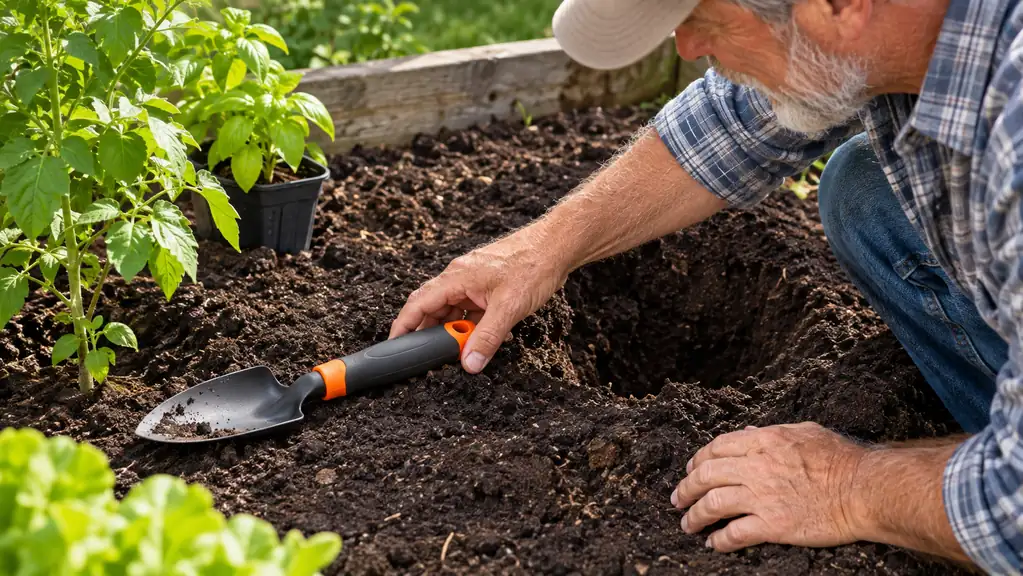
When I set out tomato and pepper transplants, I use the hori hori like a trowel: push it in, pull the handle toward me, and there is a hole the right size for a root ball. It does the job with one hand, which matters to me because my other hand is usually holding the plant. I have not owned a separate trowel since the first season with this knife.
It Divides Perennials Without a Fight
Every fall I dig up and divide my daylilies and hostas, and this is the tool I use to cut through the tangled root mass. The long blade reaches deeper than a hand fork, and the serrated edge chews through roots that would laugh at a trowel. I can split a crowded clump into three or four healthy pieces without mangling them, which means more plants for the garden and for my neighbors.
It Makes Weeding Feel Less Like a Chore
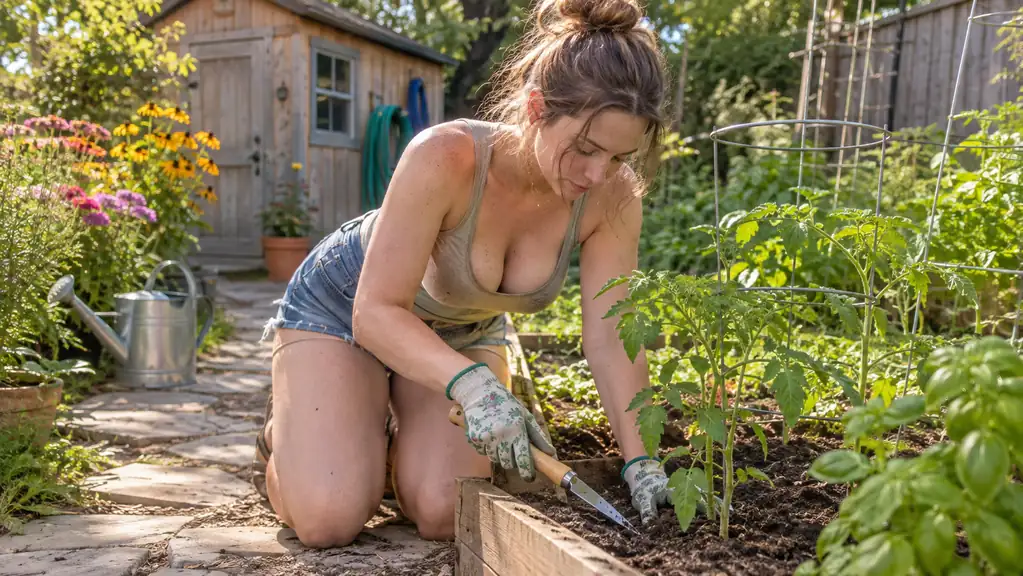
The blade slides under a dandelion or a clump of crabgrass, and the serrated edge cuts the root below the crown. You get the whole weed out in one motion instead of snapping off the top and letting it regrow. I find myself weeding for ten minutes at a time while I wait for the coffee to brew, because the tool makes the job so quick it does not feel worth putting down.
It Is Easier on My Hands and My Back
I have mild arthritis in my hands, and my lower back complains after a long day of digging. The Nisaku's wooden handle is comfortable to grip, and because the blade does the cutting, I do not have to squeeze as hard as I did with my old weeder. Working close to the soil with a long blade also means fewer times I have to bend all the way over. That alone is worth the price of the tool to me.
It Measures and Plants Bulbs the Easy Way
The inch markings do double duty in the fall. I push the blade into the soil to the depth I want, rock it sideways to open a slot, drop in the bulb, and close the soil over it. It is faster than digging individual holes with a trowel, and my daffodils come up at the depth they are supposed to instead of wherever I happened to guess.
It Cuts Through Compost and Mulch with Ease
I use my hori hori to chop through the matted layer of mulch in the paths, to cut open a bag of compost, and to work amendments into the top of a bed. The blade is sturdy enough for jobs I would never have trusted to a trowel, and the wooden handle gives me a firm grip even when my hands are muddy. It has become my default tool for anything that involves cutting, digging, or prying in the garden.
It Is the Last Garden Tool You Will Need to Replace
I have had my Nisaku for about four years, and it still looks and works like the day I bought it. The stainless steel blade does not rust, the wooden handle has held up to being left in the rain more times than I care to admit, and the included faux leather sheath keeps it safe in the shed. It replaced a trowel, a weeder, and a hand fork, and I have not had to buy any of them again.
What I'd Skip
The Nisaku hori hori is not a shovel, and it is not a digging bar. If you need to move a lot of soil or break up a new bed in heavy ground, you still want a proper spade or a fork for the big work. I also would not use it as a pry bar on rocks or roots thicker than your thumb; the blade is tough, but anything has its limits. And if you prefer a tool with a padded grip, the plain wooden handle may feel basic to you, though I have come to like how honest it feels in the hand.
Four years in, my Nisaku hori hori is still the first tool I reach for, and it has not needed to be replaced once.
Start Your Garden with the Right Tool in Your Hand
If you are tired of bending trowels and snapping weeders, this is the knife that ends the cycle. Check today's price on Amazon.
Amazon Check Today's Price on Amazon →