
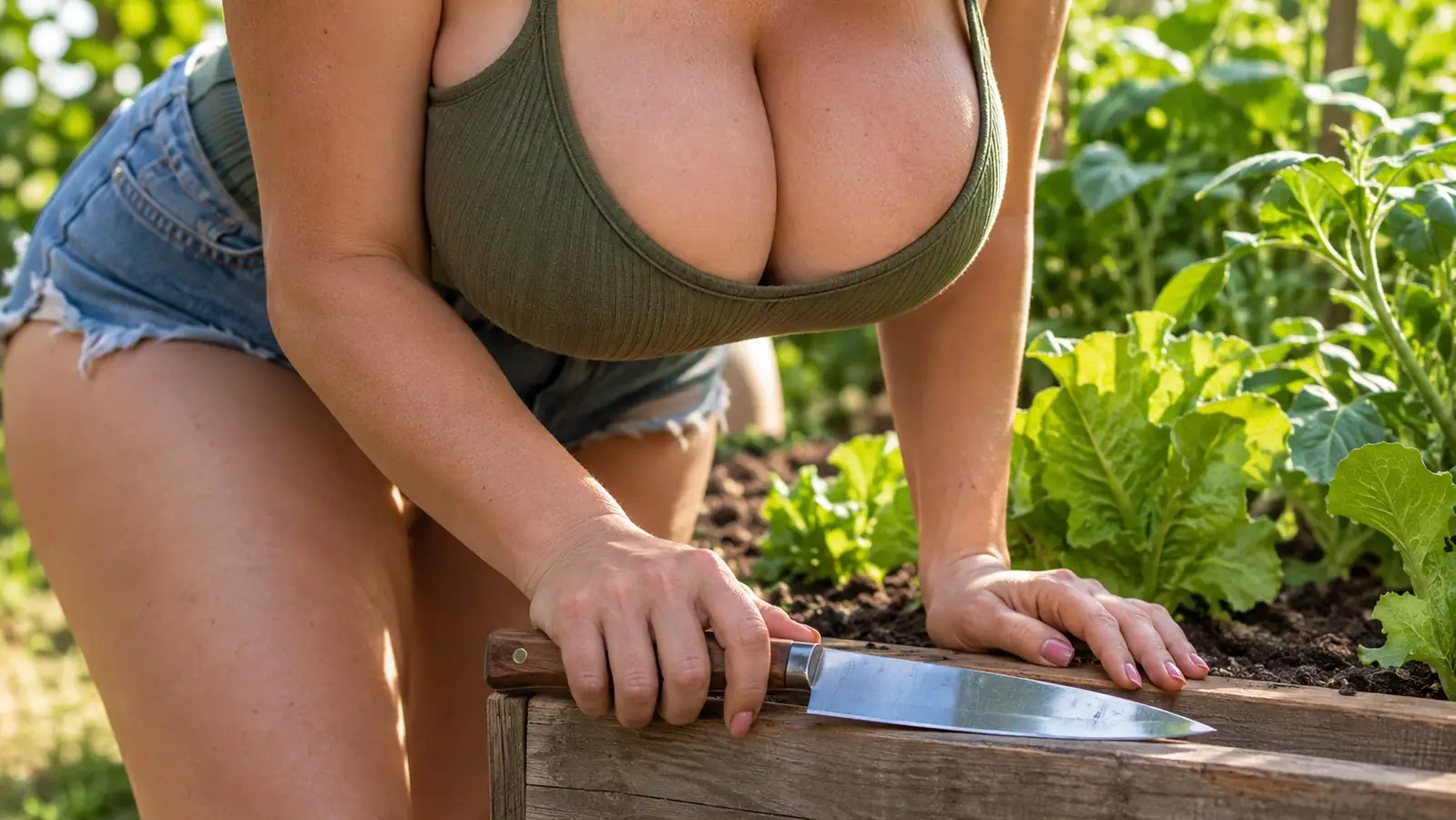
If you garden in rocky red clay, you learn early that a trowel is a suggestion, not a tool. Mine bent in the first season. The cheap weeder that replaced it folded like a spoon. Then, about four years ago, I bought a Nisaku hori hori knife, the NJP650, mostly because the inch markings on the blade looked useful for planting bulbs. I did not expect it to become the tool I reach for before the trowel, the hand fork and half the things in my shed. It has. Here is what a year of digging, planting and weeding with it actually looks like, and where I would tell you to spend your money and where to save it.
I am Hazel Whitford. I have gardened organically on a half-acre lot in the Arkansas Ozarks for about twenty years, mostly in raised beds because the native soil is rocky clay. My hands have mild arthritis and my back complains after a long day of digging, so I care a lot about tools that do the work without making me pay for it later. This is the Nisaku NJP650, used nearly every day from March through October, and a fair number of days the rest of the year.
The Quick Verdict
The Nisaku hori hori is the rare tool that replaces three others: trowel, weeder and small digging knife. The straight-back blade, serrated edge and inch markings are all genuinely useful, and after four years mine still looks and works like new.
Amazon Check Today's Price →The One Hand Tool That Stays in My Hand All Season
If you only add one tool to your garden this year, this is the one I would pick. The Nisaku NJP650 weeds, plants, divides and measures, and it has outlasted every trowel I have owned.
Amazon Check Today's Price on Amazon →How I've Used It
The Nisaku lives on a peg rack by the kitchen door, right where I grab it on the way out to the composter. In a typical week from April through September, I use it for weeding the raised beds, planting tomato and pepper transplants, sowing beans and squash, dividing perennials in the fall, and measuring planting depth for bulbs. That is not an exaggeration. It is the tool I pick up first.
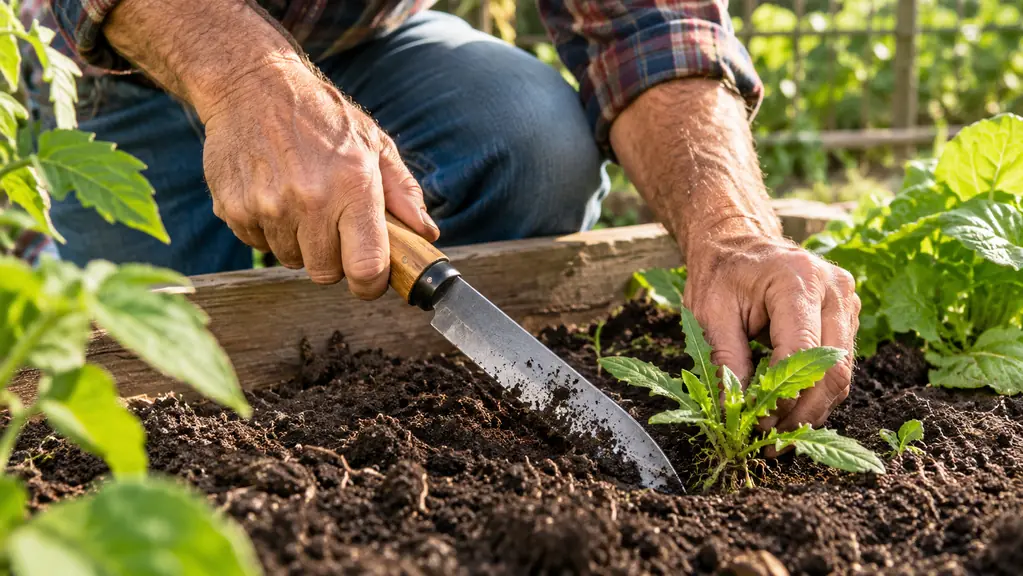
The blade is 7.25 inches of Japanese stainless steel, and the handle is wood, 5.25 inches, with the whole thing weighing about 10 ounces. The blade has both a straight edge and a serrated edge, plus inch markings along the steel. The straight edge does the digging and cutting, the serrated edge saws through roots and tough stems, and the inch markings tell me how deep I am planting without reaching for a ruler. The included faux leather sheath hangs on the rack or rides in a pocket, and the tool is ambidextrous, which matters in our house because Dale grabs it as often as I do.
The honest part: it will not dig a hole by itself. What it does is make every one of those jobs easier and faster, and it does them all with one tool that I never have to hunt for. For a gardener with arthritis in the hands, the wooden handle is comfortable and the weight does the work.
The compost connection is part of why this tool gets used so much. Our dual-chamber tumbling composter sits near the kitchen door, and I carry scraps out to it a few times a week. On the way back, I almost always stop at a bed for a few minutes of weeding. The Nisaku hangs right there on the peg rack, so it takes less time to grab it than it does to talk myself out of it. That sounds like a small thing, but it is how the weeding actually gets done in a busy week.
The Blade That Does Three Jobs
The first thing you notice about the Nisaku is the blade shape. It is a straight-back blade, curved along the cutting edge, which gives it the profile of a small sword. That shape does something a trowel cannot: it slices into the soil with a rocking motion instead of a pushing one. I can cut a clean line around a dandelion, rock the blade under the root, and lift the whole plant out in one motion. The straight edge is sharp enough for clean cuts through soil and small roots, and it holds that edge well. I sharpen mine once in the spring with a fine stone, and that is it for the year.
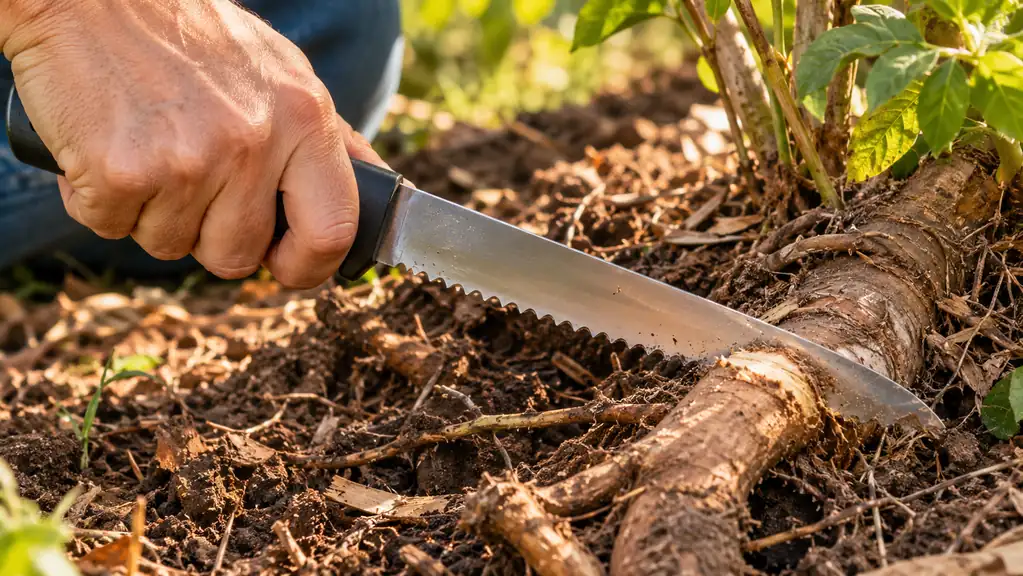
The serrated edge is the part I did not expect to love. It saws through thick roots, tough squash vines and the occasional volunteer tree seedling that thinks it belongs in my zinnia bed. When a perennial needs dividing, I use the serrated edge to cut through the crown, then the straight edge to lever the sections apart. It is not a saw and it is not a hatchet, but for anything up to about the thickness of a finger, it does the job without me fetching a second tool.
The inch markings on the blade are the detail that sold me, and they are the detail I use more than I expected. When I plant daffodil bulbs in the fall, I know they want to go about six inches down. The markings let me check the depth as I dig, without guessing. When I set out tomato transplants, I can see exactly how deep the hole is. It is a small thing, but it has saved me from a lot of shallow-planted bulbs and a lot of squinting at the end of a ruler.
One note on the steel: the Nisaku is made in Japan, and the stainless steel has held up beautifully in my clay soil. I have left it in the ground overnight more times than I care to admit, and it has not rusted or pitted. The blade shows honest wear, a few fine scratches from meeting rocks, but no bending and no chipping. That is more than I can say for the trowel that bent in its first season.
A Full Season of Weeding, Planting and Dividing
Let me walk you through what a real week looks like, because the catalog specs do not capture how the tool feels in the hand. On a Tuesday in May, I weeded two raised beds of lettuce and kale. With the Nisaku, I worked standing, rocking the blade under each weed and lifting. My back noticed the difference by the end of the row. With a trowel, I would have been on my knees for an hour and a half. With the Nisaku, it was forty minutes, most of it standing.
The same week, I planted a row of green beans. I used the straight edge to open a furrow, dropped the seeds, and used the inch markings to check the depth as I went. Then I set out six tomato transplants, using the blade to open each hole wide enough for the root ball. The serrated edge came out when I cut back the spent kale and when I sawed through a thick squash vine that had escaped its bed. Four jobs, one tool, zero trips back to the shed.
The galvanized raised beds help, too. We put in three of them three springs ago to get above the clay, and they are six feet by three feet by one foot, a size I can reach across without overstretching. The Nisaku is the tool I use in them most, because the beds are narrow enough that a long-handled tool is clumsy and a trowel is too small. The hori hori is exactly the right middle ground.
In the fall, I divided a clump of daylilies that had outgrown its spot. The serrated edge cut through the crown, and the straight edge levered the sections apart. It took about ten minutes. The same job with a spade and a knife would have taken twice as long and made twice the mess. The Nisaku is not a shovel, and I would not use it to dig a hole for a shrub, but for the jobs it is built for, it is faster than anything else I own.
The handle is worth a paragraph of its own. It is wood, smooth and comfortable, and it has absorbed four years of hard use without splintering. With mild arthritis in my hands, I appreciate that it is thick enough to grip without clenching. The tool is ambidextrous, which matters when Dale grabs it from the rack, and the whole thing weighs about 10 ounces, heavy enough to do the work but light enough to carry in a pocket. The included faux leather sheath protects the blade when it hangs on the peg rack, and it protects my apron pocket when I carry it to the compost pile.
Where It Falls Short
No review is honest without the cons, and the Nisaku has a few. The first is the sheath. The included faux leather sheath is fine, but it is not a hard sheath. If you are the kind of gardener who tosses tools into a bucket or a truck bed, the blade will find a way to poke through. I keep mine on a peg rack, so it is not a problem for me, but it is worth knowing before you buy.
The second is the handle. Wood is comfortable and warm in the hand, but it is not indestructible. I have seen photos of Nisaku handles that cracked after years of being left out in the rain. I bring mine in at night and hang it on the rack, and after four years it is still solid. If you plan to leave your tools outside, this is not the one to leave out.
The third is the price. The Nisaku costs more than a basic trowel or a cheap weeder, and for a gardener who only needs to poke a few holes in the ground, it is more tool than the job requires. I think it is worth every dollar because it replaces three tools and lasts for years, but I will not pretend it is the budget option.
The last one is a limitation, not a flaw: it is not a digging bar. For deep holes, for rocky ground that needs real force, or for anything bigger than a perennial division, you still need a shovel or a spade. The Nisaku is a precision tool, not a brute-force one. I use it for ninety percent of my hand-tool work, and I still own a shovel for the other ten.
What I Liked
- Straight-back stainless steel blade slices through soil with a rocking motion instead of a pushing one
- Serrated edge saws through roots and tough stems, so I rarely need a second tool
- Inch markings on the blade make planting depth easy to check without a ruler
- Wooden handle is comfortable for arthritic hands and the 10-ounce weight does the work
- Made in Japan with stainless steel that has not rusted or bent in four years of clay soil
- Ambidextrous, so both left- and right-handed gardeners can use it comfortably
- Backed by a 2-year manufacturer warranty for extra peace of mind
Where It Falls Short
- Included faux leather sheath is soft, not a hard guard, so the blade can poke through if tossed in a bucket
- Wooden handle needs to be brought in at night; it is not a leave-out-in-the-rain tool
- Costs more than a basic trowel or weeder, though it replaces both
- Not a substitute for a shovel when you need real digging force
Four jobs, one tool, zero trips back to the shed. That is the whole case for the Nisaku in one sentence.
Who This Is For
The Nisaku hori hori is for the gardener who is tired of owning six mediocre tools and reaching for the wrong one. If you plant bulbs in the fall, set out transplants in the spring, weed a vegetable garden through the summer, and divide the occasional perennial, this one tool will do all of it. It is especially good for gardeners with arthritis or back trouble, because the rocking motion and the weight of the blade do the work your hands and knees otherwise would.
It is also for the gardener who wants to buy once. I have owned trowels that bent, weeders that folded, and hand forks that disappeared into the compost pile. The Nisaku has been on my peg rack for four years, and I expect it to be there for another ten. It is backed by a two-year manufacturer warranty, which tells you the maker expects it to last. If that is the kind of tool you want, this is the one.
Who Should Skip It
Skip the Nisaku if you garden in containers on a balcony and only need to poke holes in potting mix. A trowel will do that job, and it will cost less. Skip it if you are the kind of gardener who leaves tools out in the weather, because the wooden handle wants to come inside. And skip it if you need a digging tool for serious ground work; this is a precision blade, not a shovel, and pretending otherwise will just frustrate you.
I will also say this plainly: if you already own a hori hori you love, you do not need this one. The Nisaku is excellent, but it is not a different species of tool. What it offers is a well-made version of a genuinely useful design, at a fair price, from Tomita Manufacturing in Japan. That is a good reason to choose it. It is not a reason to own two.
Give Your Garden the Tool That Does Three Jobs
After four years, the Nisaku NJP650 is still the first thing I reach for on the peg rack. If you are ready to retire your bent trowel, this is the replacement that will outlast it.
Amazon Check Today's Price on Amazon →