
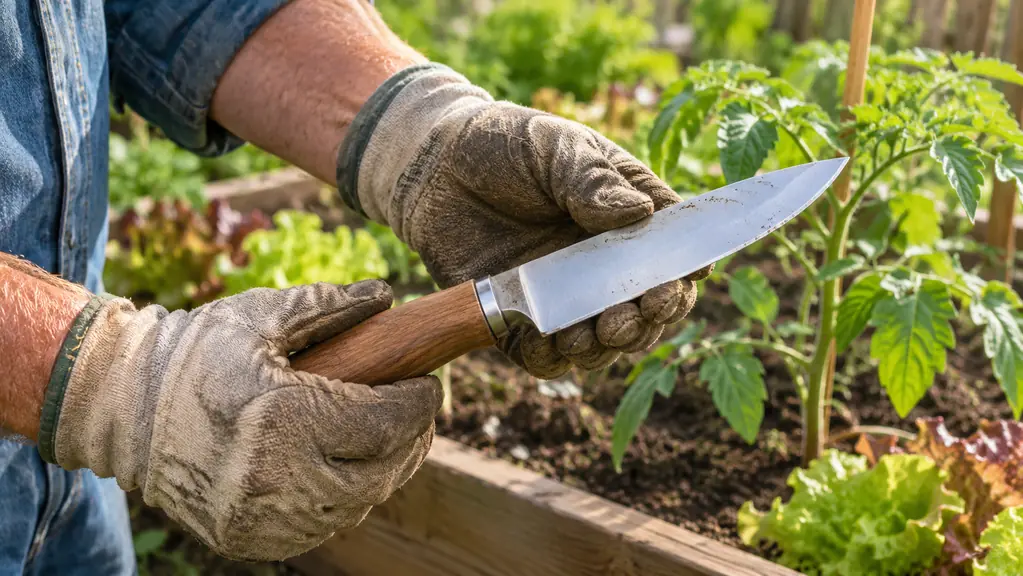
For the past four years, the Nisaku hori hori has been the tool I reach for before anything else in my garden. It has divided more perennials, pried out more dandelions, and measured more planting holes than I can count. My three raised beds, each six feet by three and filled with soil I have built up over three growing seasons, sit on ground that was solid red clay when we moved here. The Nisaku is the tool that made that clay workable, and it is the tool that keeps the beds tidy now. So when my neighbor handed me her Fiskars hori hori one afternoon in early May and said, "Try this one for a while," I expected to hand it right back. I did not. I used both through a full season, from the first lettuce thinning in May to the last tulip bulb in November, and I kept the Fiskars on the kitchen counter for a solid month so I would actually reach for it. The honest answer, after all that time in the dirt, is that each one earned its place in a different way. My neighbor's garden is mostly flowers, while mine is mostly vegetables, and that difference turned out to matter more than I expected.
If you are trying to decide between the two, here is the short version: the Nisaku NJP650 is the better all-around garden knife for someone who wants one tool that weeds, divides, transplants, and measures depth. The Fiskars is the better choice if you want a lighter knife with a comfortable grip for long sessions of detail weeding, and you are willing to give up the serrated edge and the inch markings. That is the trade in one sentence. I tested both with my own hands, which have their share of arthritis after twenty years of gardening, and I kept a running note in my garden journal about which tool I reached for and why. The pattern that emerged surprised me, because it was not as simple as one being better than the other. Now let me show you what that trade looks like in the dirt, starting with the jobs where the Nisaku clearly came out ahead.
| Nisaku NJP650 | Fiskars Hori Hori | |
|---|---|---|
| Blade | 7.25-inch stainless steel, straight back, plain and serrated edges | Stainless steel blade, shorter overall length, no serrated section |
| Measuring marks | Inch markings on the blade for planting depth | No markings |
| Handle | Wood handle, 5.25 inches, ambidextrous | Ergonomic handle with a soft grip |
| Weight | 10 oz, a solid tool that does the work for you | Lighter, easier for long sessions of detail work |
| Included extras | Faux leather sheath | No sheath included |
| Warranty | 2 year manufacturer warranty | Lifetime warranty |
| Best for | Dividing perennials, digging, measuring depth, all-day garden work | Quick weeding and detail work in tight spaces |
Where Nisaku Wins
The Nisaku wins on the jobs that actually wear a gardener out. Dividing perennials is the clearest example. My front flower bed has a clump of daylilies that needed splitting last September, and the crown had grown to about the size of a dinner plate after four years in the ground. I started that job with the Fiskars, figuring the lighter knife would be easier to manage. It was not. The blade bounced off the dense crown, and after ten minutes of sawing I had made a mess of the top growth without separating a single fan. I switched to the Nisaku, set its 7.25-inch blade where I wanted the cut, leaned my weight into the straight back, and rocked it once. The serrated edge grabbed the roots instead of sliding off them, and I had two clean divisions in under a minute. By the end of the afternoon I had split the whole clump into six pieces and replanted them along the walk, and my hands were tired but not aching. That is the difference between a tool that helps and a tool that fights you. The Fiskars is a fine weeder, but it is not a digging tool, and dividing perennials is digging. I have done the same job with a spade, and the Nisaku is easier on my lower back because I can do it kneeling instead of standing.
The inch markings are the other quiet win. When I plant bulbs or set out transplants, I use the Nisaku's blade as a depth gauge. The markings are right there on the stainless steel, so I can push the blade into the soil to the right depth and know I am not guessing. Last October I planted forty garlic cloves in the bed where the green beans had been, and I set every one of them two inches deep by lining up the second mark with the soil surface. It took me about twenty minutes, and I did not have to carry a ruler or a measuring stick out to the bed once. The Fiskars has no markings at all, which means you are back to eyeballing it or guessing. I tried it for a row of tulips along the front walk, and the depths came out uneven enough that I could see the difference when the shoots came up in March. It sounds like a small thing, but it has saved me from planting garlic too shallow and tulips too deep more than once. When I set out tomato transplants in May, I use the same trick to make sure the root ball sits at the same depth it grew in the pot. A half inch either way is the difference between a sturdy plant and one that sulks all summer.
I also give the Nisaku the edge for the heavier jobs because of the included faux leather sheath. I carry the knife on my belt when I am moving around the yard, and the sheath keeps the edge from catching on things and keeps me from reaching into a pocket full of blade. On a typical morning I will use it to cut twine on the tomato cages, pry a stubborn weed out of the path, slice open a bag of compost, and check the moisture in the squash bed, all without going back to the shed. The Fiskars does not come with a sheath, so it lives in a drawer or a tool bucket unless you buy a separate holder. That sounds like a small inconvenience, but it is the difference between a tool you grab and a tool you go looking for. I hung the Nisaku on the peg rack by the kitchen door the day it arrived, and four years later it is still there, still on the belt when I head out to the garden. Dale teases me about it, but he is the one who borrows it when he needs to cut through a stubborn root. The sheath also means I can toss the knife into the metal tote I carry around the yard without worrying about what it touches.
The one garden knife I have used for four years
The Nisaku NJP650 weeded, divided, and measured its way through four years of my garden. If you want one tool that handles the heavy jobs and the fine jobs, this is the one I would buy again.
Amazon Check Today's Price on Amazon →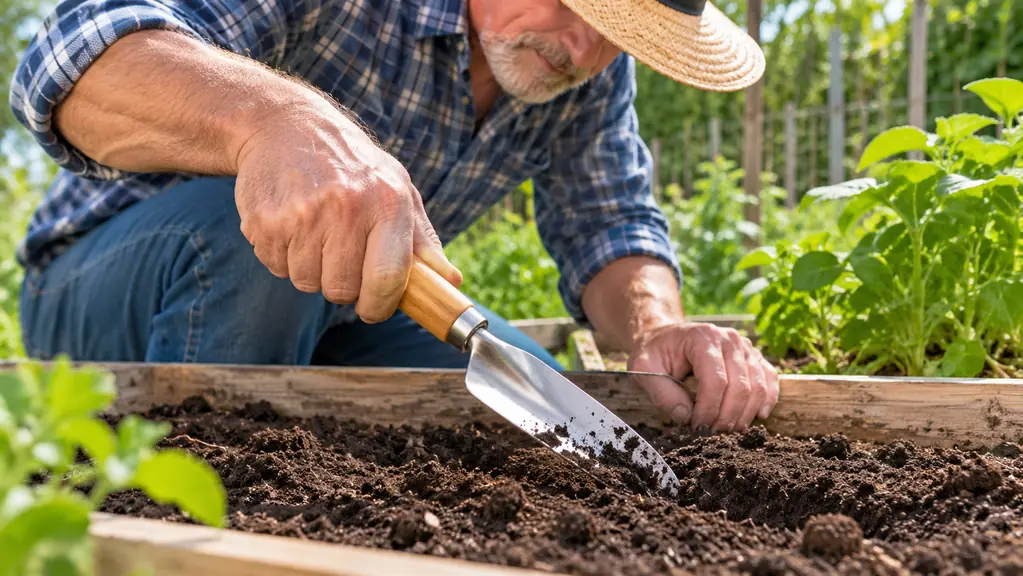
Where Fiskars Wins
I have to be fair here, because I used the Fiskars for a solid month and there were days I reached for it first. The handle is the big difference. The Fiskars has an ergonomic handle with a softer grip, and it is noticeably lighter than the Nisaku. The clearest test came in late June, when the lettuce bed went to seed and a fresh crop of chickweed and henbit moved in. I spent three mornings in a row, about an hour each, crouched over that bed with the Fiskars, working the blade under each weed and popping it out. My hands, which have their share of arthritis, did not complain the way they do after a long session with a heavier tool. The Nisaku is not uncomfortable, and I have used it for years without a second thought. But when the job is a hundred small weeds instead of one big root, the lighter grip wins. I noticed it, and I wrote it down in my garden notebook so I would not forget. On a cool morning, weeding is a pleasure either way. On a hot afternoon, when my hands are already stiff from the morning's work, the softer grip lets me keep going longer. That is a real advantage, and I would not want to talk anyone out of it.
The other place the Fiskars wins is the warranty. Fiskars backs its tools with a lifetime warranty, while the Nisaku carries a 2 year manufacturer warranty. For a tool that lives in the dirt and gets banged against rocks, that difference matters to some gardeners. I have not needed a warranty claim on either knife, but I have broken enough tools over the years to know the value of a guarantee. My old weeder, the one the Nisaku replaced, bent at the neck in its first season, and the store would not take it back. A lifetime warranty would not have saved that tool, but it would have made the loss easier to swallow. I also think the Fiskars would be a fine choice for a newer gardener who is still building a tool collection and wants to start with something light and easy to learn. If you mostly want a comfortable weeder for quick jobs and you value that kind of backing, the Fiskars is a perfectly reasonable choice. It just is not the tool I reach for when the job is big, and most of my jobs are big. I would not argue with anyone who picks the Fiskars for that reason alone.
Who Should Buy Which
Buy the Nisaku if you want one knife that does the whole job. It divides perennials, cuts through roots, weeds, transplants, and measures planting depth with the inch markings. It is heavier, but that weight is what makes the hard jobs easier. It replaced my old trowel and a cheap weeder that bent in the first season, and four years later it is still the first tool I grab. My garden is mostly raised beds now, three of them, each six feet by three, sitting on top of the red clay that used to defeat every shovel I owned. The Nisaku does not dig the beds, but it does everything after that: cutting open the bags of compost, working amendments into the top few inches, dividing the perennials that have outgrown their spots, and checking the depth of every hole before a transplant goes in. In the fall, it opens every hole for the garlic and the tulips. In the spring, it splits the perennials before they crowd each other out. I keep it on the peg rack by the kitchen door, and I reach for it more than any other tool I own. If I could keep only one hand tool, this would be it.
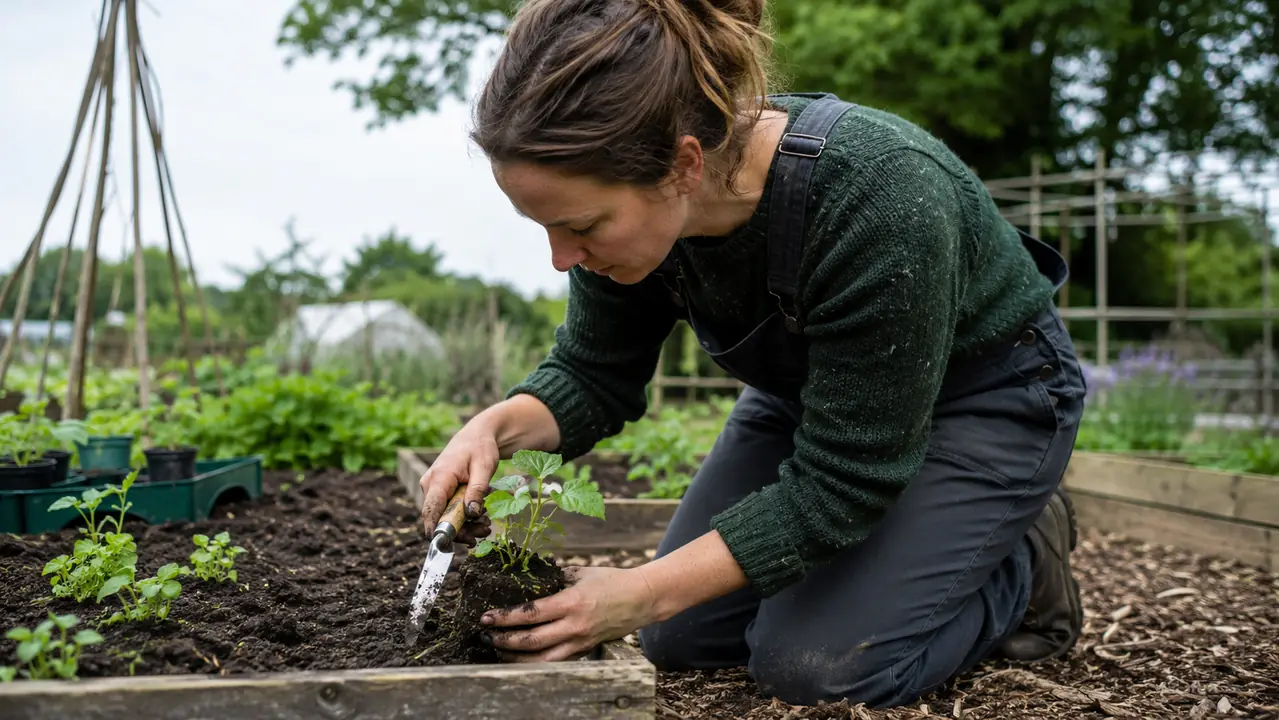
Buy the Fiskars if you want a lighter, more comfortable knife for detail weeding and you do not need the serrated edge or the inch markings. It is a good tool for someone with arthritis or weaker hands who wants something easy to grip for short sessions. My neighbor, the one who loaned me hers, has never owned a different hori hori, and she has been happy with it for years because her garden is mostly established beds that need maintenance rather than renovation. She weeds, she thins, she tucks in a few annuals, and she is done. If that sounds like your garden, the Fiskars will serve you well. Just know that you are giving up the measuring marks, the sheath, and the cutting power for the heavier jobs. There is no wrong answer here, only the answer that fits the way you garden. For me, the Nisaku earns the place on my belt, and I expect it will stay there for years to come. But I am glad I spent a month with the Fiskars, because now I can tell you the difference from experience instead of from a spec sheet.
Make the Nisaku your everyday garden knife
Four years in my raised beds and flower borders, and the Nisaku NJP650 still earns its place on my belt. See today's price on Amazon and start your own long-term test.
Amazon Check Today's Price on Amazon →