

Every July my squash leaves start looking like someone dusted them with flour. Powdery mildew, right on schedule, and right behind it come the aphids. For the past two seasons, my go-to has been Neem Bliss from plantonix, a pure cold-pressed neem oil concentrate that I mix myself with water and a squirt of mild soap. When a neighbor asked whether she should buy that or a ready-to-use bottle of Bonide Neem Max, I realized I had never lined the two up properly. So I did, and the answer depends on how you like to garden.
Here is the short version. If you already mix your own sprays, or you want the most control over what goes on your plants, buy the concentrate. Neem Bliss is one ingredient, pure neem seed oil, and you decide how strong to make it. If you want to grab a bottle and be done in five minutes, Bonide Neem Max is the easier daily tool. For my garden, with my schedule and my back, the concentrate wins. But I understand why the ready mix has its fans.
| Neem Bliss (plantonix) | Bonide Neem Max | |
|---|---|---|
| What you're buying | Pure cold-pressed neem oil concentrate, you dilute it yourself | Ready-to-use spray, already mixed |
| Prep time | A few minutes to measure and mix each batch | None, shake and spray |
| Control over strength | You choose the dilution for each job | Fixed strength from the bottle |
| Ingredients | One ingredient, pure neem seed oil | Neem oil plus other botanical oils and emulsifiers |
| Cost per application | One jug stretches across many batches | You replace the bottle more often |
| Storage | Concentrate keeps well for a couple of seasons | Best used within the season once opened |
| Best for | Gardeners who already mix their own sprays | Gardeners who want the fastest routine |
What These Two Bottles Actually Are
Neem oil comes from the seeds of the neem tree, and gardeners have used it for generations to discourage aphids, mites, whiteflies and fungal problems like powdery mildew. The catch is that you cannot spray pure oil straight from the jug. It is thick, and it needs to be mixed with water and a little soap so it spreads evenly over the leaves. That is the whole difference between these two products.
Neem Bliss is the concentrate. The label says 100 percent pure cold-pressed neem oil, unrefined, pressed from seeds grown in India. What is in the jug is neem oil and nothing else. Bonide Neem Max is a ready-to-use spray. The manufacturer has already done the mixing, and the bottle includes neem oil along with other botanical oils and emulsifiers so it stays suspended in water. You shake it, you spray it, you put it back on the shelf.
That difference sounds small until you are standing in the garden at dusk with a sprayer in one hand and a measuring spoon in the other. With the concentrate, you are in charge. With the ready mix, the manufacturer is. Both approaches work. They just ask different things of you.
I should say plainly that I have not tested every neem product on the shelf, and I am not here to tell you the other brands are bad. But after two seasons with Neem Bliss and a fair share of time helping my neighbor with her ready mix, I have a clear picture of what each format does well. The rest of this article is that picture.
How I Use Neem Bliss in My Garden
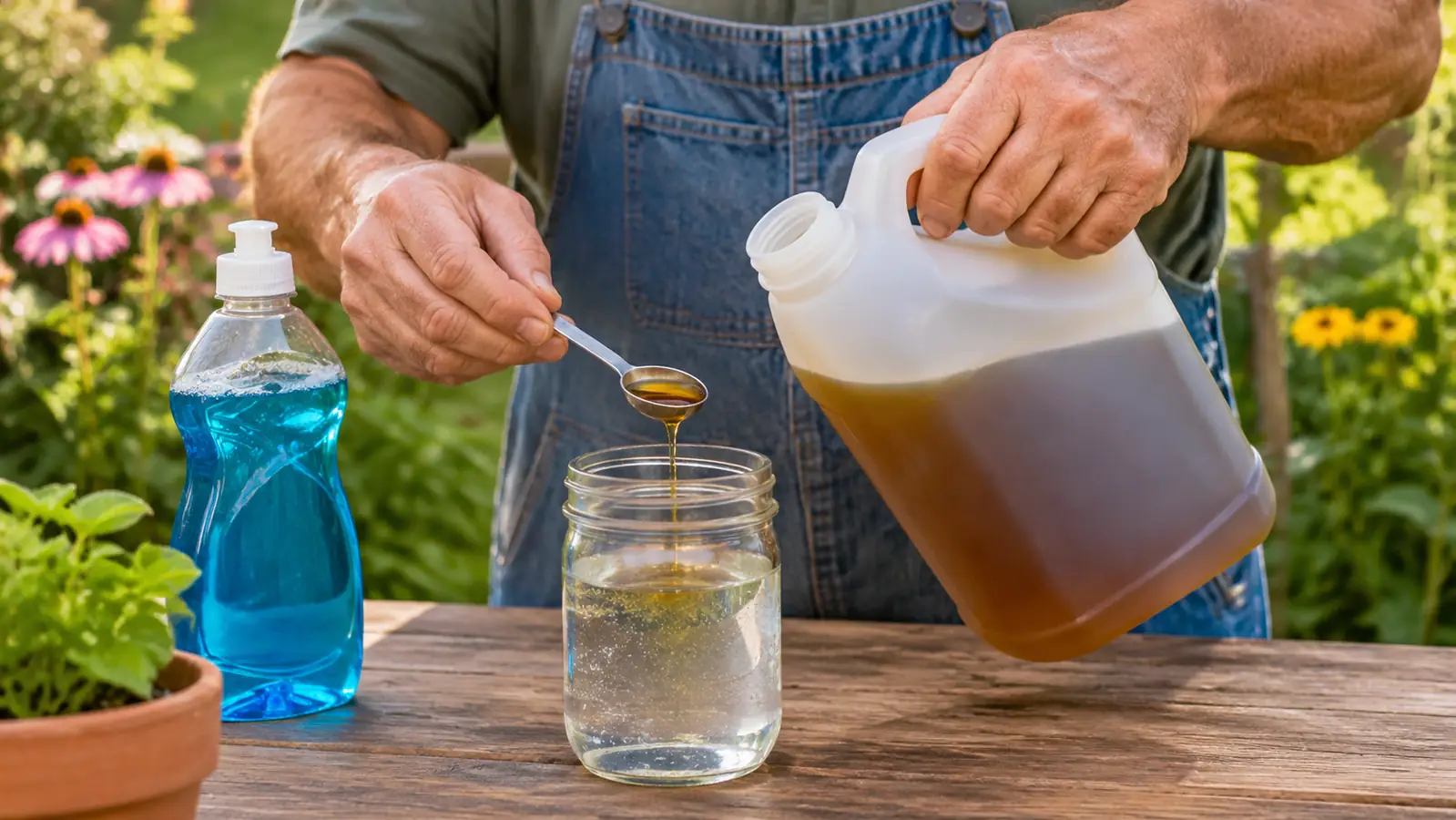
For two seasons now, Neem Bliss from plantonix has been my evening routine when the squash starts to sulk. I fill a quart sprayer with water, add about a teaspoon of the oil and a few drops of mild dish soap, and shake it well. Then I go out after the sun has dropped behind the treeline, when the bees have gone home, and I spray the undersides of the leaves where the aphids like to hide. I do the tops too, because powdery mildew does not care which side it lands on.
Two things matter with a concentrate. You have to shake the jug before you measure, because the oil settles. And you have to mix it fresh each time, because diluted neem oil loses its strength after a day or two. Neither is hard. It is just a habit, like making coffee in the morning. And because I am mixing it myself, I can make a lighter batch for the young kale and a stronger batch for the squash that is already covered in aphids.
The squash is the real test. Every year it is the first plant to find trouble, and every year the neem brings it back around. I start spraying at the first sign of white on the leaves, and I keep at it until the plants are done producing. It does not cure a bad case overnight. It slows the mildew down and gives the plant room to keep going. That is what I want from a spray.
A Few Notes on Applying Either One
The first thing to know about neem oil is when to spray. I apply mine in the evening, after the sun drops and the bees have stopped working the squash blossoms. Neem oil can stress leaves if you spray in the heat of the day, and you never want to hit open flowers while pollinators are visiting. Evening spraying also gives the oil the night to do its work before the sun hits it again.
The second thing is that neem is not a one-and-done treatment. It works by coating the leaves and discouraging insects and fungal spores, and it breaks down after a few days, especially after rain. In a wet spell, I spray once a week, and after a hard rain I go out and do it again. That is true for both the concentrate and the ready mix. The product does not matter as much as the routine.
The third thing is the smell. Neem oil smells like garlic and peanuts had a disagreement, and the smell lingers on your hands no matter how well you wash. It fades on the plants within a day, and I have never noticed it on the vegetables themselves. But if you are sensitive to strong smells, wear gloves and mix your batch outside. That goes for either bottle.
And one more note for anyone new to this. Neem oil is not a contact killer the way some sprays are. It works gradually, and it works best as a regular habit rather than an emergency rescue. Start before the problem gets bad, stay consistent, and you will get more from either product. That advice cost me a zucchini plant to learn, so I pass it along free.
One jug of concentrate has carried me through two full seasons of squash, kale and beans. I cannot say that about any ready-to-use bottle I have tried.
Where Neem Bliss Wins
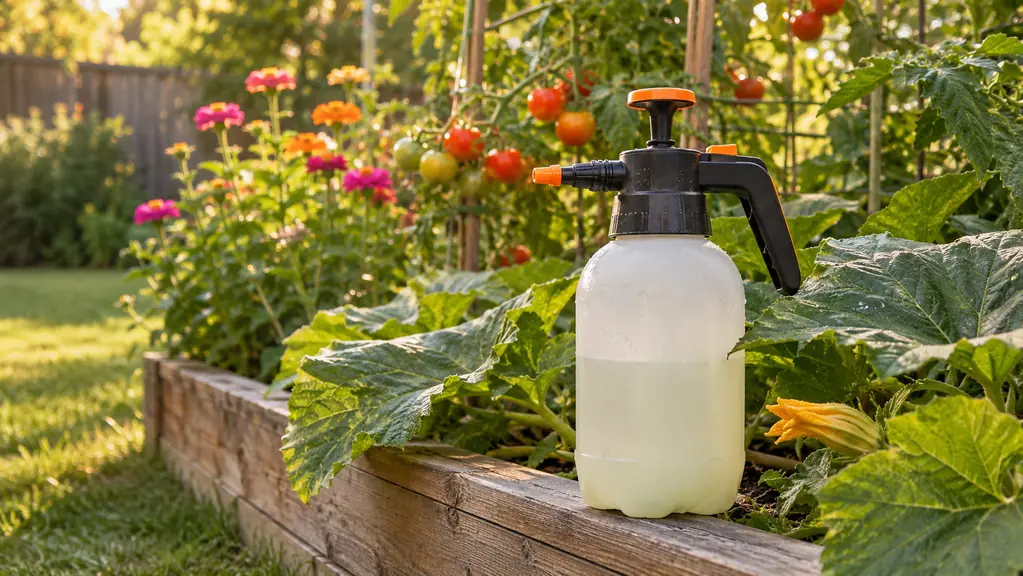
For a home gardener who is already comfortable mixing things, Neem Bliss from plantonix wins on control. Aphids on the beans might call for one dilution, while a light dusting of mildew on the zucchini calls for another. With a ready mix, you take what the manufacturer decided was right for the average garden. With the concentrate, you adjust for your plants, your weather and your patience. That matters more than you would think in a wet Arkansas spring, when the mildew shows up overnight and the only thing that helps is a slightly stronger spray applied right away.
It also wins on the honest matter of economy. A 16-ounce jug of concentrate makes a great many batches, because each batch uses only a teaspoon or two. I bought my first jug before last season, and it is still going. A ready-to-use bottle covers a smaller area and gets replaced more often. Over two seasons, the concentrate has been the more economical choice, and it takes up less room in the shed. For a gardener on a fixed budget, that is not a small thing.
And there is the ingredient question. Neem Bliss is one thing only: pure, unrefined, cold-pressed neem seed oil. When I am spraying something I am going to eat, I like knowing exactly what is on it. The ready mix has more in the bottle. Most of it is fine, but 'most of it is fine' is not the same as 'this is the whole list.'
The other thing I will say for the concentrate is that it keeps. I store my jug in the shed, out of the sun, and it has stayed usable across two seasons. A ready-to-use bottle that sits half-empty through the winter is a different story. Diluted sprays separate and lose their punch, and you end up pouring the rest out in the spring. The concentrate does not punish you for a busy August.
Where Bonide Neem Max Wins
I have to be fair here, because the ready mix has real advantages. The first is time. On a July evening when the mosquitoes are out and my back is already complaining from the day's work, the difference between mixing a spray and just grabbing one is the difference between doing the job and putting it off until tomorrow. My neighbor who asked about the two bottles gardens in containers on her porch and sprays maybe twice a month. For her, a ready-to-use bottle is the difference between a routine she keeps and a routine she abandons.
The ready mix also takes the guesswork out of strength. Every time I mix my own, there is a small voice wondering whether I got the dilution right. Too strong and you can stress the leaves on a hot day. Too weak and you have wasted an evening. Bonide Neem Max removes that question entirely, because the manufacturer has already balanced it. For someone new to neem, or someone who does not want one more measuring task in their day, that is a genuine benefit, not a marketing line.
It is also easier to keep at the back door. The ready mix lives in a spray bottle, so it is ready when you are. The concentrate needs a measuring spoon, a jar and a few minutes. Neither is a burden. But if your gardening style is 'five minutes before dinner,' the ready mix fits your life better.
And I will admit something else. On the evenings when my hands are stiff and the last thing I want is another measuring task, I understand the pull of a bottle that is simply ready. There are seasons in every gardener's life when easy wins. If a ready mix keeps you spraying when you would otherwise skip it, that is the better product for you, full stop.
For mixing your own, Neem Bliss is the one I keep buying
Pure cold-pressed neem oil concentrate with one ingredient, and it has carried my squash through two seasons of aphids and mildew. Check today's price on Amazon.
Amazon Check Today's Price on Amazon →Who Should Buy Which
Buy Neem Bliss if you already mix your own foliar sprays, if you garden more than a few containers, or if you want one ingredient you can trust on food crops. Buy Bonide Neem Max if you want the fastest possible routine, if you spray rarely, or if you would rather not measure anything after a long day. There is no wrong answer. The right answer is the one you will actually use on a Tuesday evening in July, because a spray that sits in the shed helps nobody.
If you are still deciding, start with how you actually garden, not how you wish you gardened. Do you keep a sprayer mixed and ready? Do you enjoy the ten-minute ritual of making a batch? Then the concentrate will serve you well. Do you reach for whatever is closest when you notice a problem? Then the ready mix will be the one that actually gets used.
For what it is worth, I keep the concentrate in my shed and I do not plan to switch. But I have told my neighbor to buy the ready mix, and I meant it. She will use it, and using something consistently beats owning the better thing and reaching for it twice a season.
Start with the concentrate, the way I did
Neem Bliss from plantonix is the pure cold-pressed neem oil I have used for two seasons. One jug, one ingredient, and it is still going. See today's price on Amazon.
Amazon Check Today's Price on Amazon →