
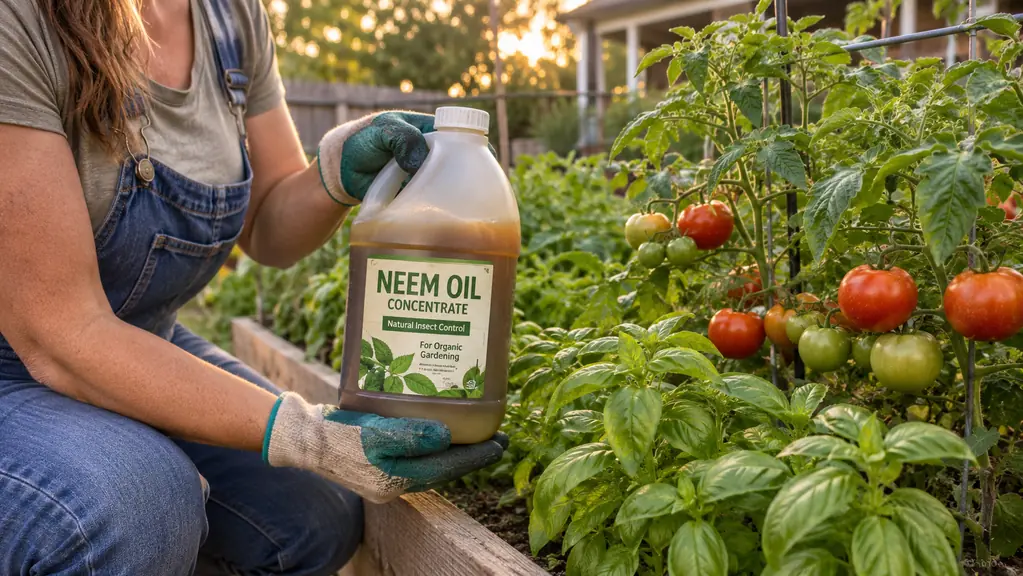
I have kept an organic garden for about twenty years, and for most of that time I fought aphids and powdery mildew with everything from soap sprays to pulling up whole plants in frustration. About two seasons ago I added a jug of plantonix neem oil to the shelf in my shed, and it has quietly become the thing I reach for first. Here are ten reasons why, in the order I actually think about them.
The one jug that earns its shelf space
Plantonix Neem Bliss is pure, cold-pressed neem oil concentrate, and it has handled aphids and powdery mildew in my garden for two seasons. See today's price on Amazon and keep a bottle by the shed door.
Amazon Check Today's Price on Amazon →It is one ingredient, not a cocktail of chemicals
The label says 100% pure, cold-pressed neem oil, and that is what is in the jug. I do not need to keep a straight face while I tell myself a mystery blend is fine for the squash I am going to eat. One ingredient is easier to trust, easier to store, and easier to explain to a neighbor who asks what I am spraying.
It stops aphids before they take over
I found a cluster of aphids on my pepper plants last June, sprayed once in the evening, and checked again three days later. The colony was gone and the new growth came in clean. Neem works on contact and lingers on the leaf long enough to break the cycle, which matters when you garden in a climate where aphids arrive early and breed fast. I had tried a soap spray first, the kind I used to mix from dish soap and water, and it knocked them back for a day before they came right back. The neem spray was different. I sprayed the undersides of the leaves, where the aphids were actually hiding, and gave each pepper plant a good coat. By the third morning I could not find a single live aphid, and the ants that farm them had moved on too. That was the day I stopped reaching for the soap.
It handles powdery mildew on squash
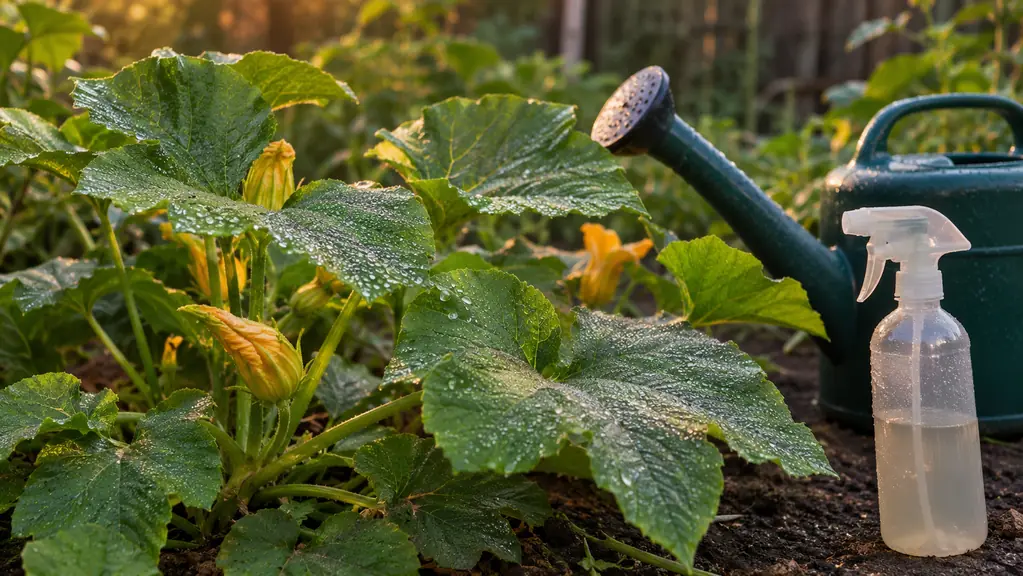
My zucchini looks like it has been dusted with flour by late July every single year. A weekly evening spray of diluted neem oil kept the mildew from spreading last season, and the plants stayed productive into August instead of giving up early. That alone paid for the jug. I started the routine the first week of July, before the white spots had a chance to take hold, and I sprayed every seven days for six weeks. I made sure to hit the undersides of the big squash leaves, because that is where the mildew likes to start. By the end of August the leaves were still green at the crown, and I picked zucchini right up until the first cool night in September. The year before, without the spray, I had pulled the whole row out on the tenth of August.
It is kind to the insects I want to keep
I do not spray when the bees are working the zinnias, and I spray in the evening so the spray has time to dry before morning. Used that way, neem has never seemed to hurt the ladybugs, bees, or earthworms in my garden. That matters to me, because the good insects are doing half the work.
A little goes a long way
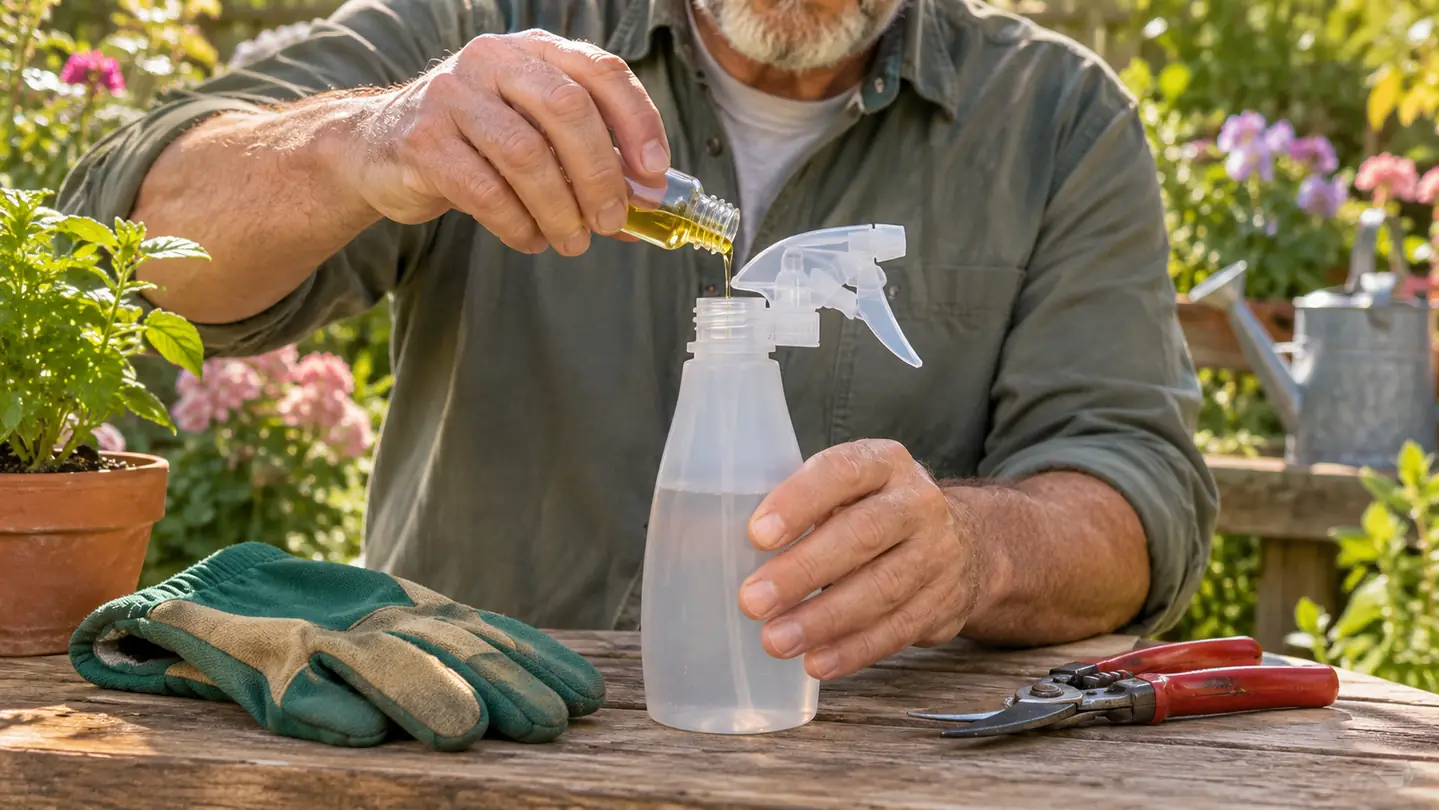
I mix one small pour of concentrate into a spray bottle of water with a drop of mild soap, and that bottle covers my tomatoes, peppers, and squash. A 16-ounce jug has lasted me two seasons. For the money, it is one of the cheapest fixes in my shed. The exact mix I use is about a teaspoon of the oil and a drop of dish soap in a quart of water, shaken well before every spray. That quart covers the three raised beds and the herb strip by the back door. I do not have to remix it every day either, though I do give the bottle a good shake each time I pick it up, because the oil and water like to separate. When I realized I was still on the same jug at the end of the second summer, I stopped worrying about the cost per spray entirely.
It fits the way I already garden
I garden in raised beds over rocky red clay, and I build the soil with compost and worm castings. Neem oil fits that same mindset: it works with the garden's natural systems instead of fighting them. It is not a rescue chemical for a garden I have neglected. It is a maintenance tool for a garden I am already tending.
It is forgiving when I mix it by feel
I measure carefully, but I am not running a lab. Neem oil is forgiving enough that a slightly strong or slightly weak mix still does the job without burning the leaves. I have made mistakes with it and the plants came through fine, which is more than I can say for some things I have sprayed over the years.
It works for more than the vegetable patch
The same jug I use on squash and peppers is the one I reach for on the roses and the herbs by the back door. One product covering the whole garden keeps my shed simple. When I only need one bottle for everything, I am more likely to actually use it.
It keeps the gardener's back in mind
I am sixty-one, and my lower back complains after a long day of digging. Neem oil saves me from the hardest job in the garden: pulling up a plant that has given up. A few minutes of spraying in the cool of the evening beats an afternoon of yanking out diseased squash vines, and my back agrees. I mix the spray at the kitchen counter, carry the bottle out in one hand, and work my way down the rows at a slow, steady pace. It takes me maybe ten minutes to cover the whole vegetable garden, and I am not bent over or lifting anything heavy. Compare that to the August I spent digging out a dead squash root system with my hori hori knife, and the choice is obvious. The spray keeps the plants standing, which keeps me standing too.
It has earned its place for two seasons straight
I do not keep products around out of loyalty. I keep the ones that work. The plantonix jug has been on my shelf for two full seasons, and I have reached for it more than anything else in my pest kit. When something works that reliably, I stop shopping for alternatives.
What I'd Skip
I would skip neem oil if you are hoping for a one-time cure that erases every pest with a single spray. It is a tool you use as part of a routine, not a magic wand. I also would not spray it in the middle of a hot afternoon, because that is when it can stress the leaves, and I learned that the hard way on a hundred-degree day in July when the squash leaves curled up by evening. And if your garden is already in serious trouble, start with the worst plants and give the spray a few days to work before you judge it. It is not the answer for a full-blown infestation that has been building for weeks, and it is not a substitute for pulling up a plant that is truly done for. Use it early, use it regularly, and it will do its part.
I have kept the same 16-ounce jug of plantonix neem oil for two seasons, and I reach for it more than anything else in my pest kit.
The last pest fix you will keep reaching for
Two seasons in, plantonix Neem Bliss is still the first thing I grab when the aphids show up. Check today's price on Amazon and give it a spot on your shelf.
Amazon Check Today's Price on Amazon →