
It started with the squash. Every year I tell myself I'll check the undersides of the leaves more often, and every year the aphids find the zucchini before I do. Last July I went out with my coffee and saw the new growth curling. I turned a leaf over and there they were, dozens of tiny pale aphids lined up along the stem, with a few ants already tending them.
I've gardened organically for about twenty years on a half-acre lot at the edge of a small town in the Arkansas Ozarks, so I know the first instinct: don't reach for the harsh stuff. I tried hosing the aphids off with a strong stream of water. It worked for about a day. The next morning they were back, and they'd brought reinforcements. A homemade soap spray did a little better, but I had to reapply every few days and I never quite got ahead of the colony.
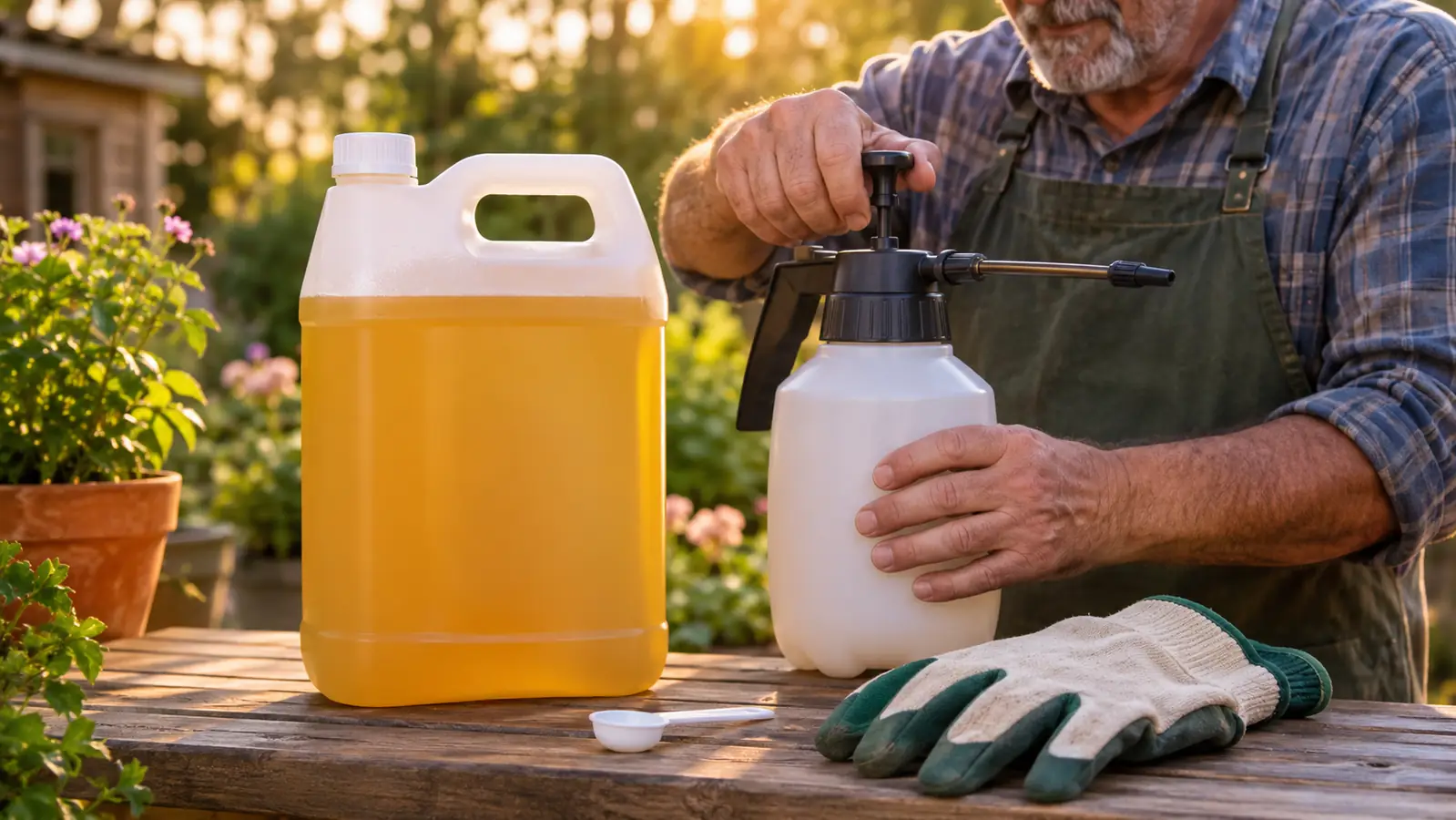
That's when I started reading about neem oil and settled on plantonix Neem Bliss. It's a pure, cold-pressed neem oil concentrate in a simple jug, 16 fluid ounces, unrefined and sourced from India. What sold me was what wasn't in it. No additives, no synthetic fillers, just the oil itself. For someone who prefers working with the soil rather than against it, that mattered.
The way I use it is simple. I mix a little of the concentrate with water and a drop of mild dish soap in a hand sprayer, then I go out in the evening and spray the undersides of the leaves. The soap helps the oil and water stay mixed. The evening timing matters because that's when the bees and the ladybugs have mostly gone to roost, and the oil has the night to do its work before the sun hits it.
I sprayed the squash three evenings in a row that first week. Two evenings after the first spray, the new leaves were coming in clean. The aphids didn't disappear overnight, and I didn't expect them to. What changed was the direction of things. The colony stopped growing, the ants lost interest, and within about ten days the ladybug larvae had moved in and finished the job. I kept up a weekly spray for another month, mostly to be safe, and by August I had to look hard to find a single aphid on the squash.
Two evenings after my first spray, the new leaves on the squash were coming in clean. The aphids didn't vanish overnight, but they stopped winning.
Aphids on your squash? This is the bottle I keep in the shed.
Neem Bliss is the pure cold-pressed neem oil I've used for two seasons now. It's a concentrate, so one jug goes a long way in the sprayer.
Amazon Check Today's Price on Amazon →The same bottle earned its place a few weeks later when powdery mildew showed up on the squash leaves. I'd read that neem oil can help with that too, so I sprayed the affected leaves with the same evening routine. The white patches stopped spreading, and the plants carried on producing until the first hard frost. I can't promise it will do the same for every garden, but it did for mine.
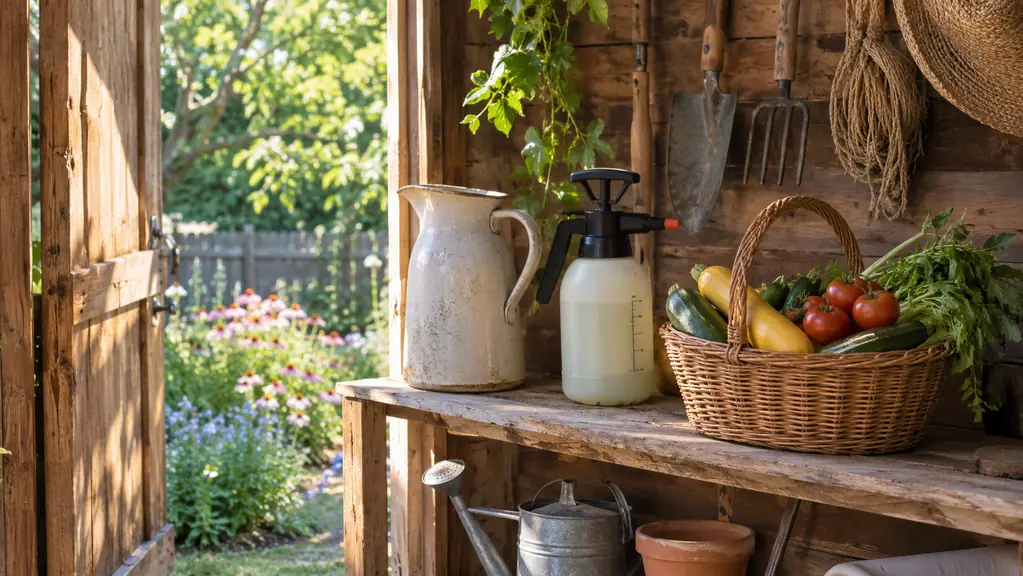
The second season I was smarter. I started checking the undersides of the leaves in early June, before the aphids had a chance to build their numbers. When I spotted the first few on the kale, I sprayed once and that was mostly the end of it. I went back to the plantonix jug in the shed, mixed a fresh batch, and made one pass in the evening. The key, I learned, is to catch them early and to reapply after a rain, because the oil washes off.
A few practical notes from two seasons of use. Test any spray on a leaf or two first and wait a day, because plants under stress can be sensitive. Don't spray in the heat of the afternoon, and don't drench the blossoms, because you don't want to harm the pollinators that visit them. And be patient. Neem oil works by making the plant a less welcoming place for the aphids, not by nuking everything on contact. It takes a few days to see the change, and that's normal. Give it a week before you decide whether it's working.
The jug itself is a plain, no-nonsense thing, easy to grip and pour, which matters more than you'd think when your hands complain at the end of the day. I keep it on a shelf in the shed, out of the sun, and I give it a good shake before I measure out a spoonful. A little goes a long way in the sprayer.
It's also worth saying what this isn't. It isn't a one-time fix, and it isn't a substitute for paying attention. The reason my garden recovered wasn't just the spray. It was the ladybugs and lacewings that were already out there, waiting for the aphid population to drop to a level they could handle. The neem oil tipped the balance. The garden did the rest.
What I'd Tell You If We Were Sitting at My Kitchen Table
If you came over and we were sitting at my kitchen table with coffee, here's what I'd say. Buy the neem oil, but buy it for the right reasons. It's a tool, not a cure-all. Start by looking at your plants before you reach for anything. Check the undersides of the leaves, learn what aphid damage looks like, and spray early in the season when the problem is still small. Mix it fresh, spray in the evening, and give it more than a day to work. And keep an eye on the good insects, because they're the ones doing the heavy lifting. The plantonix bottle is a good one. I've used it for two seasons and I'll buy it again. Start with one plant if you're unsure, see how it goes, and let your garden teach you the rest.
The same bottle I've used for two seasons
Neem Bliss from plantonix is the pure cold-pressed neem oil concentrate I keep in the garden shed. If aphids or powdery mildew are finding your garden, this is a gentle place to start.
Amazon Check Today's Price on Amazon →