
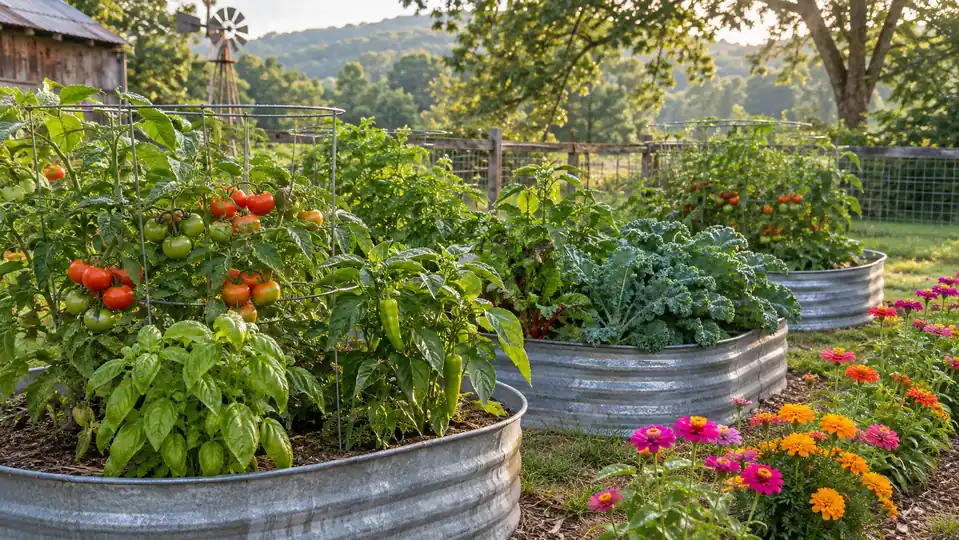
Three springs ago I gave up on wooden raised beds for good. Not because they did not look lovely, because they did. My old cedar beds were the prettiest thing in my garden for about four years. Then the corners started to soften, the sides bowed under the weight of wet soil, and by year five I was patching rot with a pry bar and a very bad attitude. I replaced all three with Land Guard galvanized raised beds, 6 by 3 by 1 foot each, and I have not regretted it once. This is the comparison I wish someone had walked me through before I ever bought lumber, because the two kinds of beds are not really competing on the same things.
So which is better for an organic garden? In my experience, the Land Guard bed wins for anyone who wants to build soil for the long haul without rebuilding the box every few years. The galvanized steel is rust resistant, the bed holds 15.55 cubic feet of soil, and it went together in about five minutes. Wood is still the right call for some gardens, and I will get to that honestly. If you want the longer story of how these beds have held up, the [full long-term review](/land-guard-raised-bed-review-long-term/) covers it.
| Land Guard Galvanized Bed | Wooden Raised Bed | |
|---|---|---|
| Material | Q195 0.78mm double-layer galvanized steel, rust resistant | Cedar or pine, naturally rots over time |
| Assembly | About 5 minutes to set up | Cut, drill and fasten, or pay more for a pre-built kit |
| Lifespan | Still solid after 3 springs, rust resistant | My old beds gave out around year 5 |
| Summer soil temperature | Warms fast in spring, but edges can heat up in July | Insulates, keeps the root zone cooler |
| Looks | Clean oval metal with modern lines | Blends into a cottage garden |
| Soil volume | 15.55 cubic feet at 1 ft deep | Whatever height you build, often deeper |
| Best for | Gardeners who want years of low-maintenance growing | Gardeners who want tall beds, cool roots, and a natural look |
Where Land Guard Wins
The reason I switched is the reason I would pick it again: it lasts. Wood is always working its way back to the forest, and my old beds proved it. The Land Guard bed is made from Q195 galvanized steel sheet with a double-layer galvanized finish, and the listing calls it rust resistant. Three springs of rain, snow, and Arkansas humidity later, all three beds still look like the day I put them together. No bowing, no soft corners, no splinters, no weekend repair projects. That is the whole argument in one sentence, and it is the one I keep coming back to.
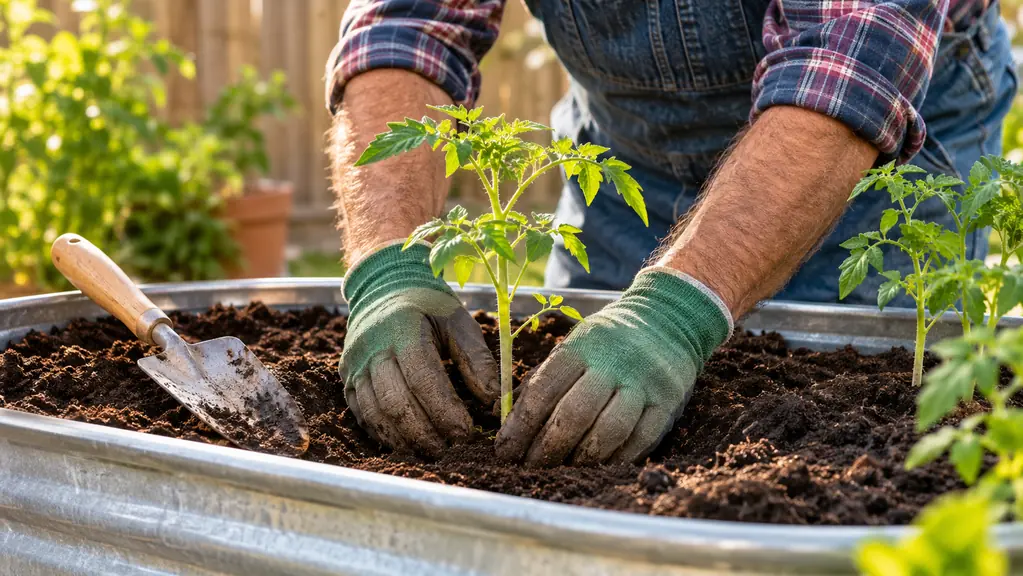
Assembly matters more than it sounds like it should, and this is where the metal bed surprised me. The Land Guard bed took about five minutes each, and I put all three together by myself, which matters when you have arthritis in your fingers. The panels are light, the whole kit weighs 14.1 pounds, and they fit together without the wrestling matches I remember from building wooden frames. The metal also warms the soil faster in spring, so my lettuce and spinach get a head start. For a gardener who wants to spend the season planting instead of repairing, that is a real difference.
The rust resistance deserves its own mention because it is the feature I was most skeptical about. Galvanized metal has a reputation for eventually developing rust spots, especially where the panels meet. I checked the seams every spring, expecting the worst, and so far there is nothing. The double-layer galvanized finish has held up even where water sits against the inside wall after a heavy rain. I cannot promise it will look this good in ten years, but three years in, it looks new.
Three springs of rain, snow, and Arkansas humidity later, all three beds still look like the day I put them together.
Where Wooden Raised Beds Win
I will not pretend the wooden beds had no strengths, because they did. The biggest one is summer heat. Galvanized metal absorbs the sun, and in late July the soil along the inside edges of my Land Guard beds gets warmer than I would like. My beans and squash cope fine, but shallow-rooted plants close to the metal can stress on the hottest days. Wood insulates instead. A wooden bed keeps the root zone cooler and more even, which matters in a climate where August afternoons are brutal.
The other thing wood has going for it is how it looks and how deep you can build it. A cedar bed settles into a garden like it grew there. The oval metal beds are handsome in their own way, but they read as modern, and not every garden wants that. Wood also lets you build tall, two feet or more, which is easier on the back and better for deep-rooted crops. If I were starting a garden at my age with a cranky lower back and an eye for a pretty border, I would think hard about a tall wooden bed.
There is also something to be said for the way wood works with a gardener's hands. If you like building, a wooden bed is a pleasant weekend project, and you can make it exactly the size and height you want. You can notch the corners, add a lip for kneeling, or screw in hooks for trellises without a second thought. Metal beds are what they are, a fixed oval shape, and you work with that. Some gardeners will always prefer the flexibility of wood.
The Bed That Outlasts the Season
If you are tired of rebuilding wooden beds every few years, the Land Guard galvanized raised bed is the one I reached for. It went together in minutes, holds 15.55 cubic feet of soil, and has shrugged off three Arkansas winters.
Amazon Check Today's Price on Amazon →Who Should Buy Which
Buy the Land Guard bed if you want a garden that is mostly about the soil and the harvest, not about carpentry. It suits organic gardeners who plan to stay in the same spot for years, who want to build compost-rich soil without the box falling apart underneath it, and whose backs appreciate a bed that goes together in five minutes. It is also the better choice in a damp climate, because rot is simply not a question the metal has to answer. If you want the whole argument in one place, I put together [ten reasons galvanized beds suit organic gardens](/10-reasons-galvanized-raised-beds-suit-organic-gardens/).
Buy a wooden bed if the garden is as much about the look as the lettuce. If you want a tall bed to save your back, or a natural border that fades into the flower beds, or you enjoy building things and do not mind replacing a bed every five to eight years, wood is a perfectly good choice. It also stays cooler in summer. There is a reason wooden beds have been around forever, and it is not just tradition. I still miss how my old cedar beds looked, even if I do not miss rebuilding them.
Why I Had Both Kinds
A little background helps explain my bias. I have gardened organically for about twenty years on a half-acre lot at the edge of a small town in the Arkansas Ozarks, and the native soil is rocky red clay. That clay is why I garden in raised beds at all. The first beds I built were wood, three cedar frames that looked wonderful and lasted about five years before rot got into the corners. When I finally pulled them apart, the soil underneath was beautiful, dark and full of worms, and I realized the beds had done their job even as they fell apart. The box was the only part that failed.
So three springs ago I put in three Land Guard galvanized beds in the same footprint, 6 by 3 by 1 foot each. I chose the metal for one reason: I wanted the soil to be the thing I replaced, not the box. Three years on, that is exactly how it has worked. The beds have held their shape through heavy rain and freeze-thaw winters, and the soil inside keeps getting better because I keep feeding it compost. My husband Dale helped me move the kits from the truck, and the two of us put all three together the same weekend.
What I'd Check Before You Buy
Before you order any raised bed, metal or wood, think about depth. The Land Guard bed is 1 foot tall, which is plenty for lettuce, herbs, peppers, beans, and most tomatoes. If you want to grow root crops like carrots and potatoes, or if bending over is hard for you, a taller bed is worth considering. One foot still means a fair amount of stooping, and I notice it by the end of a long planting day.
Also do the soil math before the delivery truck arrives. Each Land Guard bed holds 15.55 cubic feet, and three beds means almost 47 cubic feet of soil to fill. That is a lot of compost, topsoil, and worm castings, and it adds up fast. I filled mine with my own compost, screened topsoil, and a bag of Wiggle Worm castings, and I still ended up buying more mix than I expected. Plan for that, and you will not be caught short on a Saturday afternoon.
A Note on Soil and Worms
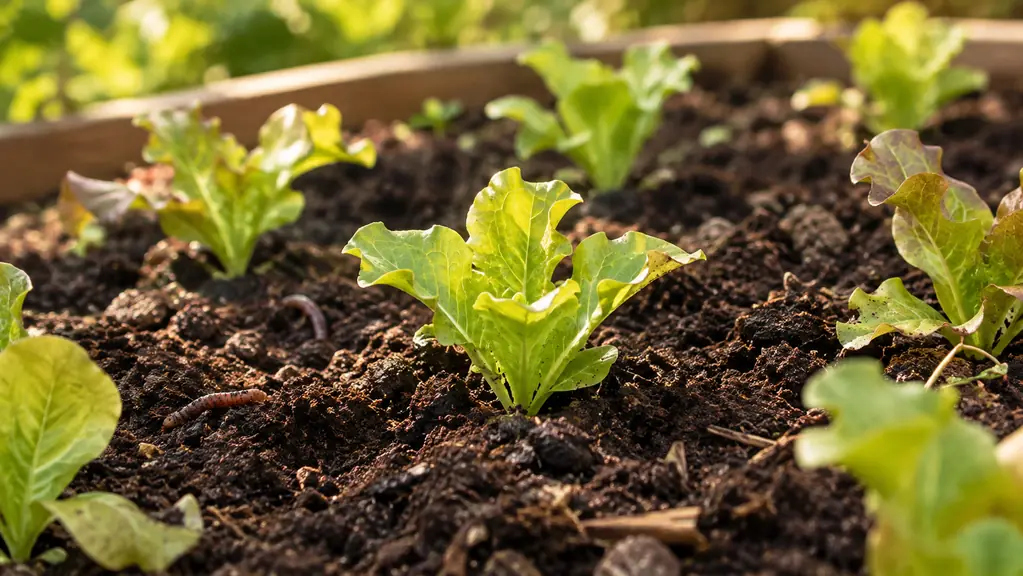
Organic gardeners tend to care about what is happening under the surface, and the two beds treat soil differently. Metal warms up fast in spring, which wakes the soil life earlier, and I have noticed my compost and worm castings break in quicker in the Land Guard beds. The tradeoff is summer, when the same metal can dry out the edges. I mulch heavily, an inch or two of straw, and that solves most of it. In the wooden beds, the soil stayed cooler and more even, but it also took longer to warm up in March.
For the record, both kinds grew excellent vegetables. My tomatoes did not care what the box was made of, and the worms moved freely between the beds. The difference was never about harvest size. It was about how much of my time and energy went into maintaining the container instead of tending the plants. The Land Guard beds ask almost nothing of me, and at my age, that is the feature I value most. I would rather spend a Saturday morning turning compost than replacing a rotted corner board.
If You Are Still Undecided
If you are still going back and forth, here is the question I would ask yourself: do you want a garden project or a garden? There is nothing wrong with wanting the project. Building a wooden bed is satisfying, and the result can be beautiful. But if what you really want is a place to grow tomatoes for the next ten years with the least fuss, the Land Guard bed is the lower-maintenance answer. It is not the prettiest thing in my yard, but it is the most dependable.
And if you do choose wood, buy the best cedar you can afford and build it tall. The extra height will save your back, and good cedar will buy you a few more years before the rot wins. Either way, the most important thing is the soil you put inside. A galvanized bed with great compost will outgrow a wooden bed with poor soil every single time. The box is just the box. The soil is the garden.
Three Springs In, Still the Right Call
The Land Guard galvanized raised bed is the one I would buy again tomorrow. It is rust resistant, simple to set up, and it lets me spend my energy on the soil instead of the box.
Amazon Check Today's Price on Amazon →