
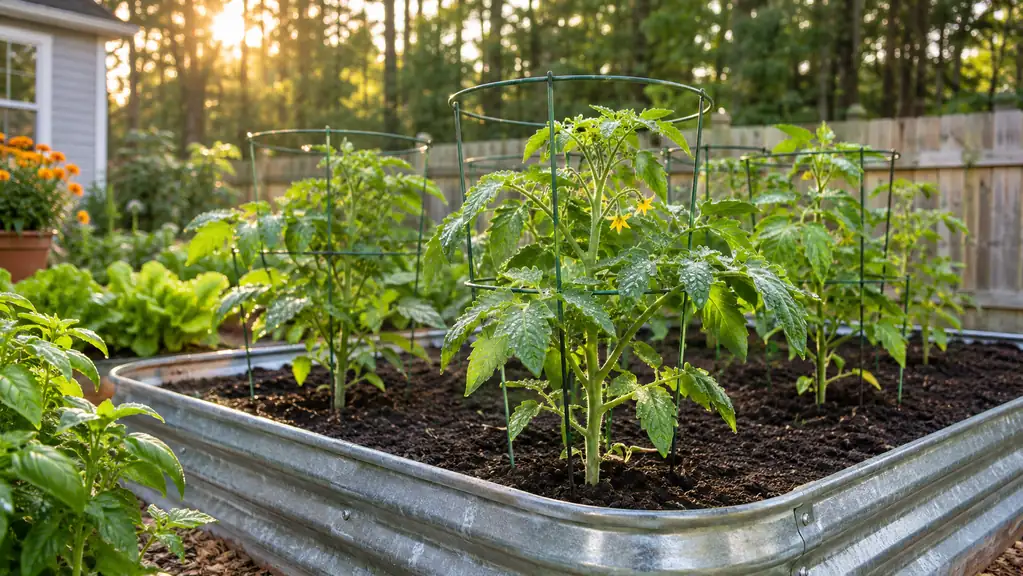
The first raised beds I built myself lasted about five years. Cedar boards, screwed together one spring, soft at the corners by the fourth winter, and leaning by the fifth. Three springs ago I ordered three Land Guard galvanized raised garden beds, 6 by 3 by 1 foot each, all in one order, and Dale and I put them together the same weekend they arrived.
I did not test one bed first and order more later. That is not like me, but I had already lost a season to rotting wood and I wanted the question settled: could metal beds hold up through Ozarks summers, hard freezes, and the clay that finds its way into everything? After three growing seasons, I have an answer, and it is the reason I am writing this review.
The Quick Verdict
Three growing seasons in rocky red clay, no rust, no lean, no rot. The Land Guard bed gets you above bad soil and stays there. Budget for more fill than you expect and a second pair of hands for assembly, and this is the last raised bed you will need for a long while.
Amazon Check Today's Price →Three seasons in, I would buy the same three beds again.
If you are tired of rebuilding wooden beds every few years, this is the upgrade I would make first. Thick galvanized steel, simple assembly, and it stands right on the ground so the soil stays connected to the earth below.
Amazon Check Today's Price on Amazon →How I've Used It
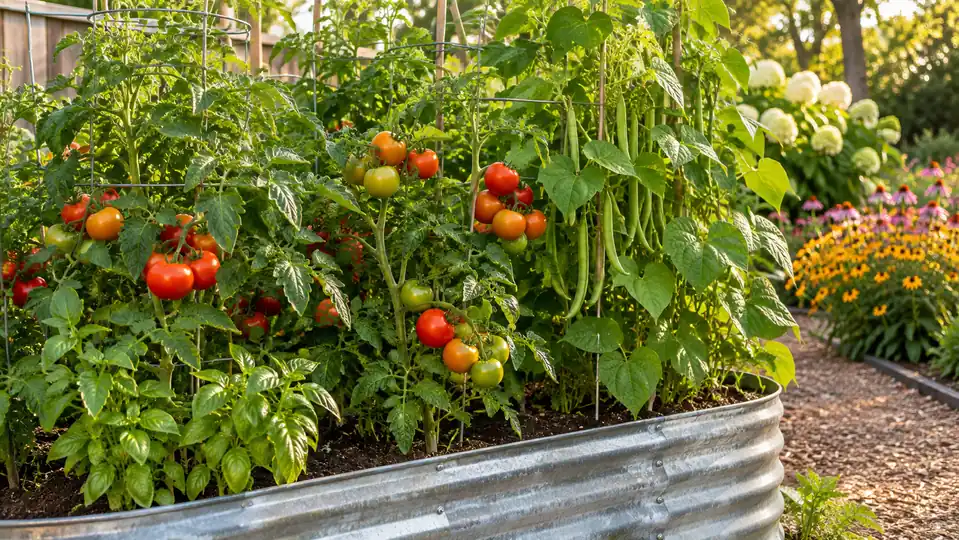
The beds live in the backyard vegetable garden, side by side, with a path of wood chips between them. They face south, so they catch the sun from mid-morning until late afternoon. The native soil there is rocky red clay, the kind that bakes into brick in August, so the whole point of the beds was to get above it. Each one holds 15.55 cubic feet, and the 12-inch depth has been enough for everything I grow: tomatoes, peppers, green beans, squash, kale, lettuce, and basil, with zinnias and marigolds tucked into the ends for the pollinators. I rotate by family each year, tomatoes and peppers in one bed, beans and squash in the second, greens and herbs in the third, so the soil does not get tired.
Assembly was the easy part. The panels are Q195 galvanized sheet, 0.78mm on average, and the listing says a bed goes together in about five minutes. With Dale holding one end and me working the bolts, each bed took about ten. The corners lined up, the hardware was all in the box, and there was no cutting, no sanding, and no paint to wait on. The boxes arrived flat, and all three stacked together took up less space than one load of lumber. The beds stand right on the ground, which is what I wanted: the soil connects to the earth below, so worms and moisture can move up.
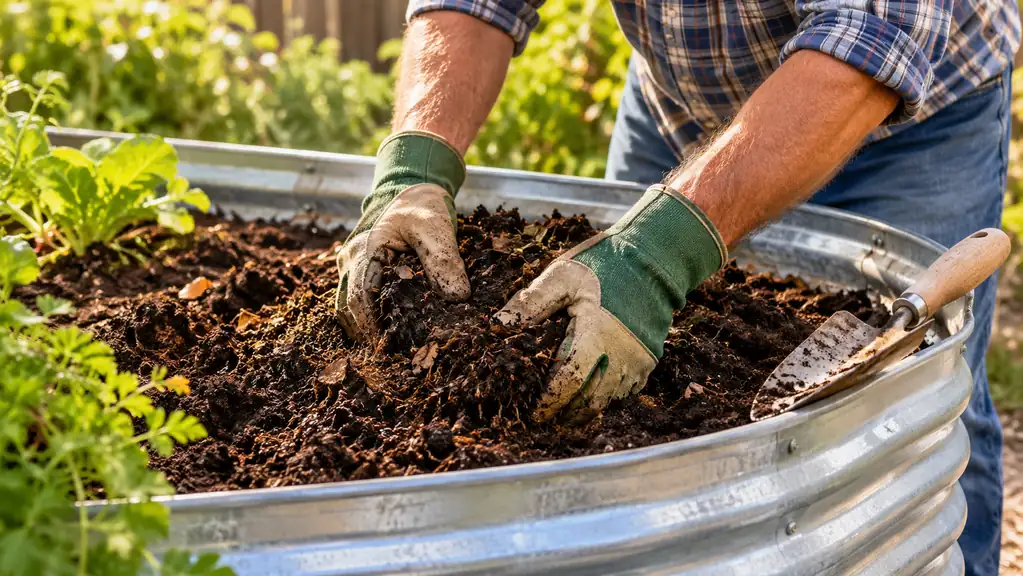
Filling them was the part I underestimated. Three beds at 15.55 cubic feet each ate every bit of compost I had, plus bagged soil, plus a top dressing of Wiggle Worm castings, which I have used for about three seasons. I layered it the way I layer everything: a little native clay in the bottom to hold moisture, then compost and topsoil, then castings on top. That first fill was a big weekend, but it was also the last time I had to do it. The VIVOSUN composter I have used for two years sits near the kitchen door and feeds these beds directly, so the loop has been closed ever since.
Three Seasons of Weather on Galvanized Steel
The first winter I braced for rust. Galvanized metal in the Ozarks goes through freeze and thaw, soaking rain, and July sun that can cook the soil surface. Three seasons in, the beds look almost the same as the day we built them. The double-layer galvanized finish has held, and I have not seen a spot of rust, not even at the bolt holes where I was sure the coating would scratch. The galvanized coating is the reason I chose metal over painted steel, and it has not let me down. In February, the beds thaw a little sooner in the sun than the open ground, which means I can set out lettuce a week earlier. I do not cover the beds in winter; the metal shrugs off the weather, and the soil inside gets a good freeze that settles it for spring.
The beds have not leaned, either. My old wooden beds sagged at the corners by year three and were wobbly by year four. These are still square, and the corners have not worked loose even though I have bumped them with the wheelbarrow more times than I can count. The 0.78mm sheet is thick enough that the sides do not bow when a bed is full of wet soil.
The one weather complaint I have is heat. In July, the metal edge gets hot to the touch in full sun, and the soil right against the sides dries out faster than the middle. I mulch the edges with straw and water a little deeper near the rim. On the hottest afternoons I lay a board across the edge to sit on while I harvest, which keeps the metal off my legs. That is normal raised-bed care, not a reason to skip the bed, but I would not set one against a south-facing wall where the heat has nowhere to go.
What the Oval Shape Means in Practice
The oval shape is the detail I notice most. It holds 15.55 cubic feet, which is a little less than a rectangle of the same length and width, so the footprint is honest but not greedy. What I like about the curve is how easy it is to reach: there are no corners to cram a trowel into, and the Nisaku hori hori knife I have used for about four years slides right along the curve when I am weeding.
The depth is the same everywhere, a full 12 inches, and that has been enough for every vegetable I grow. Tomatoes sink roots past the surface heat, squash spreads without complaint, and the kale and lettuce stay cool at the edges. For a home garden, 12 inches is the sweet spot: deep enough for real roots, shallow enough that filling the bed does not swallow your whole compost pile. The edges are where I tuck the shallow-rooted herbs like basil, and the middle is where the deep drinkers go. I have grown basil in this bed for three summers, and it does better here than it ever did in the open ground.
One practical note: the beds are 14.1 pounds empty, so you can move one before you fill it, but not after. I learned that when I decided the third bed was one foot too close to the fence and had to shovel out half of it to slide it over. Move them where you want them first, then fill. The oval also makes spraying easier: when powdery mildew showed up on the squash, I worked my way around the curve in the evening with Neem Bliss diluted with water and a little mild soap, which I have used for about two seasons, and there was no corner to miss.
Where It Falls Short, Honestly
The first shortfall is the fill. Three beds at 15.55 cubic feet each is a lot of soil, and I went through my whole compost pile, a stack of bagged soil, and a bag of castings in one weekend. A single bed is a manageable weekend project. Three beds is a full weekend and then some. If you are starting from scratch, budget for that before you order, or you will have three empty boxes and a lot of regret.
The second is assembly with one person. It is doable alone, but the panels are long and flexible, and the listing's five-minute claim assumes a second pair of hands. With Dale it was easy. Alone, I would plan on twenty minutes and a little patience. My hands have mild arthritis, so I wore gloves and took my time with the bolts.
The third is the heat at the edges in summer, which I mentioned already. It is manageable with mulch, but if you garden somewhere that regularly passes a hundred degrees, the soil against the metal will dry faster than the middle, and you will water more often at the rim. That is the trade for any metal bed, not a flaw in this one.
How It Compares to the Wooden Beds It Replaced
I keep comparing these beds to the wooden ones they replaced, because that is the real question: is metal worth the switch? My old beds were cedar, screwed together, and they gave me about five years before the corners softened and the sides started to bow. The wood also needed a fresh coat of something every couple of years, and I never got around to it. The last year, I was propping up a corner with a brick, which is not a dignified way to garden.
The Land Guard beds have now outlasted that first set of wooden beds in every way that matters. No soft corners, no bowing, no paint to scrape, no boards to replace. The galvanized finish needs no annual attention, and because the beds stand on the ground, there is no wooden bottom to rot out. The only maintenance I do is the same I would do for any bed: mulch, compost, and a top dressing of castings each spring. I do not seal, stain, or paint anything, and I do not have to. The corners are still square enough that I do not think about them, which is the highest praise a garden bed can get.
If you are weighing metal against wood, the honest answer is that wood is friendlier to look at and easier to replace, and metal lasts. Wood has its place in a flower border, but for vegetables I reach for the metal beds first every season. The wooden beds were a five-year project. These are a one-time purchase, and three seasons in they look like year one.
What I Liked
- 0.78mm double-layer galvanized steel, no rust in three seasons
- Assembled in about ten minutes per bed with two people
- Full 12 inches of soil depth for tomatoes, squash, and herbs
- 14.1 pounds empty, easy to move before you fill it
- No wood to rot, no paint to scrape, no corners to sag
Where It Falls Short
- Oval shape holds a little less than a rectangle of the same footprint
- Metal edge gets hot in July and the soil beside it dries faster
- Filling three beds ate my whole compost pile in one weekend
- Assembly alone is awkward; the panels really want two people
Three seasons in, these beds look the way they did the weekend we built them. I cannot say that about any wooden bed I have owned.
Who This Is For
This bed is for the gardener who is done rebuilding. If you have replaced a wooden bed once, or watched one lean and rot, and you want something that will outlast the decade, the Land Guard bed is worth the switch. It is also for anyone gardening on poor soil, because 12 inches of good soil above clay beats digging into the native ground. And it is for gardeners whose backs and hands complain: I fill and plant above the clay instead of digging into it, and the galvanized surface does not give me splinters the way my old lumber did. If you garden in clay, you already know the feeling of chopping at ground that bakes like brick. These beds end that. My own back thanks me every spring, because I am bending to a bed, not to the ground.
Who Should Skip It
Skip this bed if you only need a season or two. A cheap wooden bed or even a mound of soil will grow tomatoes for one summer, and if you move often, hauling a metal bed is more trouble than it is worth. Skip it if you want a deep bed for long root crops like carrots and potatoes, because 12 inches is fine for most vegetables but shallow for those. And skip it if you cannot get the soil to fill it: the bed is the easy part, and three beds will eat your compost pile faster than you expect. And if you like the look of wood in a flower garden, these beds are not trying to be pretty; they are trying to grow food.
Stop rebuilding beds. Start building soil.
The Land Guard bed gets you out of the clay and keeps you there, season after season. It is the last raised bed I plan to buy, and if I needed another, I would make the same order again tomorrow.
Amazon Check Today's Price on Amazon →