
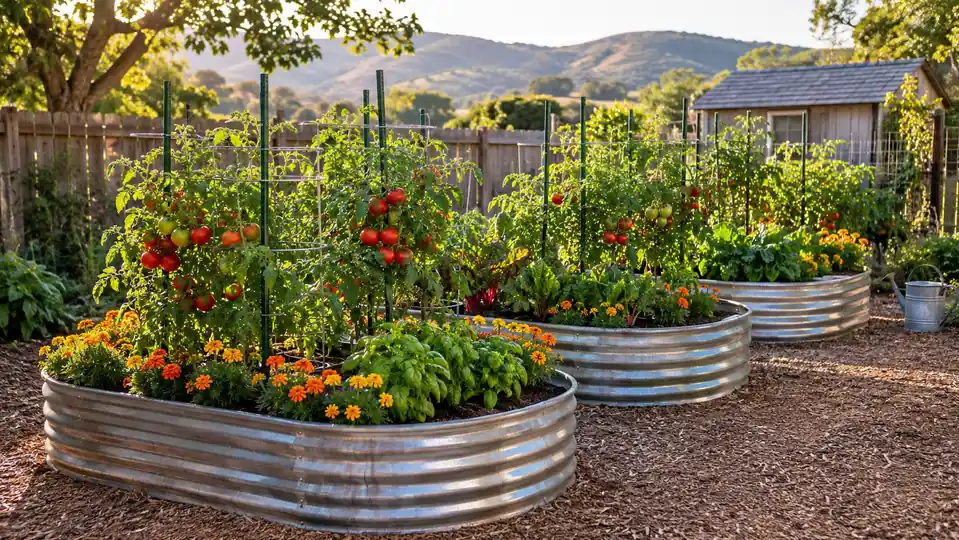
Three springs ago I stood over the ruins of my last wooden raised bed and finally admitted what I had been avoiding for a year. The cedar sides I built by hand had given me five good seasons, but the corners had rotted through and the soil was washing out onto the red clay. I ordered three Land Guard galvanized raised beds that same afternoon, all in one order, and Dale and I put them together that weekend. This is the review I wish I had read before I clicked buy: what the listing photos do not show, what the five-minute assembly claim really means, and whether the beds still earn their keep after three growing seasons.
I am Hazel, by the way. I have been gardening organically on this half-acre for about twenty years, and my soil is the reason I switched to raised beds in the first place. The native dirt here is rocky red clay that bakes hard in July and turns to mud in March. A raised bed lets me build the soil instead of fighting the ground, and after the wooden beds rotted out, I needed something that would outlast my patience. I retired from nursing a few years back, and the garden is where I spend most of my mornings now. It keeps my hands busy and my head quiet, and I would rather spend an hour turning compost than an afternoon at the hardware store.
The Quick Verdict
A lightweight galvanized bed that has held up through three Arkansas seasons with no rust and no regrets. Not perfect: the oval shape and flexible long sides take getting used to, and you will top up the soil every spring. But for getting above bad ground fast, it has earned its place in my garden.
Amazon Check Today's Price →Three seasons in, still standing in red clay
I bought three of these beds in one order and they have been through three Arkansas summers, two ice storms and more squash vines than I can count. The galvanized panels look about the same as the day they arrived. If you are trying to get above bad soil without building anything, this is the bed I would start with.
Amazon Check Today's Price on Amazon →How I Used These Beds
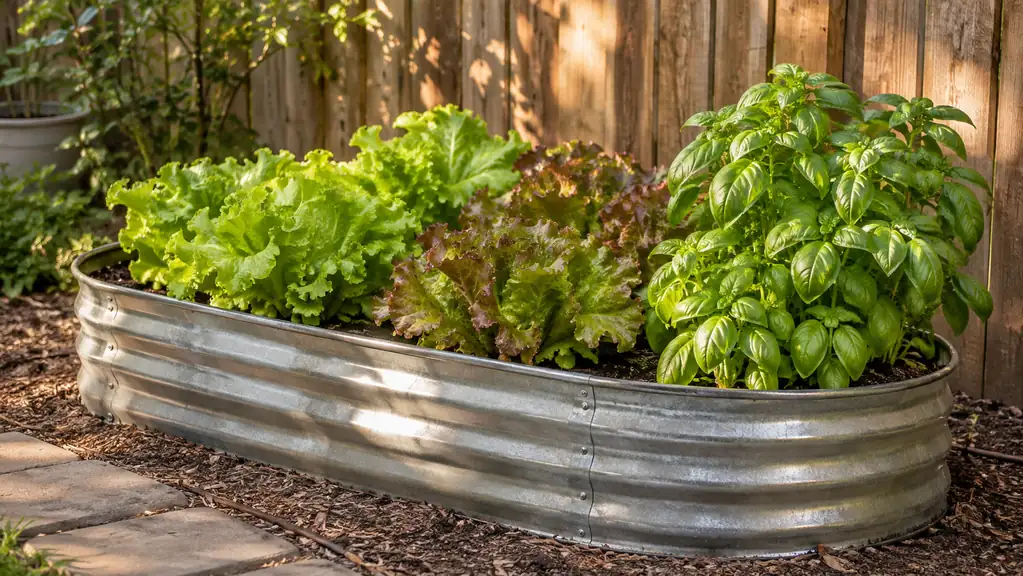
Context matters, so here is my setup. I have three of these beds, all bought in one order and assembled the same weekend three springs ago. They sit side by side along the south side of the yard, where the tomatoes, peppers, green beans and squash get full sun. The kale, lettuce and basil go in the third bed, with zinnias and marigolds tucked into the ends for the pollinators.
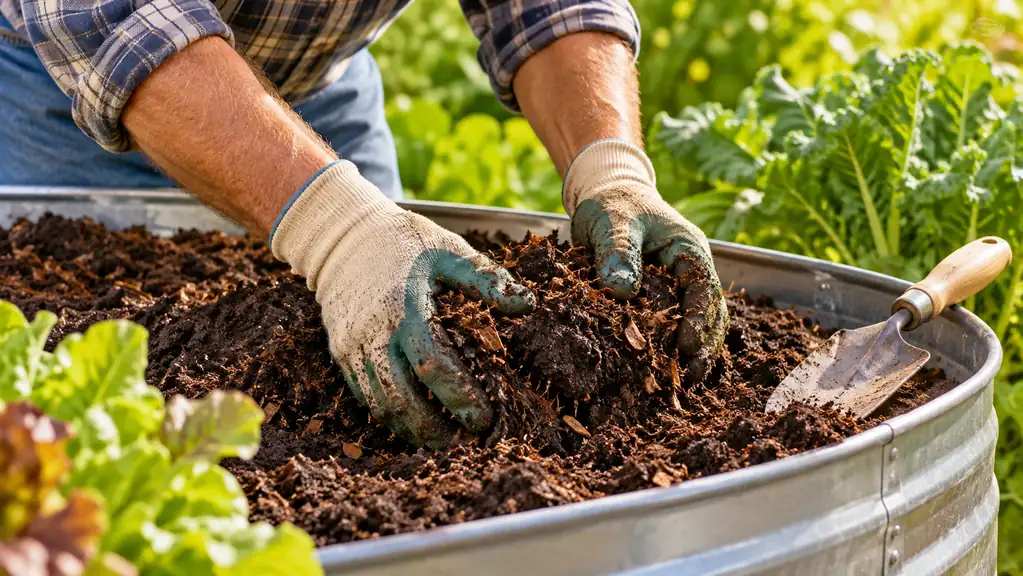
Each bed holds 15.55 cubic feet of soil, which is the number I checked before I ordered. I filled them with a mix of my own compost, worm castings and the better parts of the native soil I dug out, and I have been feeding that same soil ever since. Three seasons in, the soil in these beds is darker and looser than anything I ever grew in the ground here. That is the whole point of a raised bed, and these deliver it.
I rotate the crops between the three beds each spring, which is easier with beds than it ever was in the ground because I can see at a glance what went where. Tomatoes go in the bed that had beans the year before, beans go where the squash was, and the squash moves to the bed that held tomatoes. It is not a perfect rotation, but it is better than nothing, and the soil has stayed healthy.
Assembly: What Nobody Tells You
The listing says assembly takes about five minutes, and I believe that is true if you have one bed, a perfectly level patch of ground and a helper who has done this before. My honest experience: each bed took closer to fifteen minutes the first time, and most of that was not the bed. The panels are light, the whole thing weighs 14.1 pounds, and the 0.78mm sheet feels solid in your hands. But you have to level the ground first, and on my rocky clay that meant digging, shoving soil under the low corners and checking with a level more than once.
With my arthritis, I worried about the assembly, and I want to be honest about that too. The panels are light enough that I could lift and position them myself, and no piece was too heavy for my hands. The part that bothered me was the edge of the galvanized sheet when I gripped it. Gloves are not optional, during assembly or later when I weed along the rim. It is not a dealbreaker. It is just something nobody puts in the photos.
One more thing I learned the hard way: assemble the bed where you want it to live. I set up the first one on the grass, admired my work, and then realized I needed to move it two feet to the left. An empty bed is light enough to drag, but the long sides flex and the whole thing wants to fold in the middle. Fill it in place.
What Three Growing Seasons Taught Me
The first thing you notice with galvanized beds is soil temperature. The metal warms up fast in the spring sun, which meant my tomatoes got off to an earlier start than they ever did in the wooden beds. The same warmth cuts the other way in July: the soil dries out faster along the edges, and I water more often in the heat. I mulch heavily now, and that has mostly solved it.
Drainage is excellent. After a hard Ozarks rain, the water runs through these beds instead of pooling on top, which matters with tomatoes that hate wet feet. The soil stays loose because I am not walking on it, and the worms have found their way up through the bottom. When I dig in the spring, I find earthworms in every shovelful, and that tells me the soil is alive.
The beds have also survived things I did not plan for. Two ice storms, a wet spring that turned the yard to soup, and a summer with three weeks of hundred-degree days. The double-layer galvanized finish has not shown a single rust spot, and the panels are as straight as the day we set them up. I cannot say that about the cedar beds they replaced, which had soft corners by year three and were falling apart by year five.
The harvest has been the real proof. My tomato plants in these beds have out-produced anything I grew in the ground, partly because the soil stays loose and partly because I can plant a little earlier. Last summer I put up forty-two pints of tomato sauce and still gave bags away to the neighbors. The squash did well too, right up until the powdery mildew showed up in August, which is a garden problem, not a bed problem.
The Honest Downsides
Now the part the listing does not advertise. The oval shape is the first thing you have to make peace with. It looks lovely and fits nicely against a fence, but you lose the square corners that make rectangular beds so easy to plant. I do a lot of my gardening with a hori hori knife, and I have learned to work with the curve, but if you are a square-foot gardener who plans every inch, the oval will fight you.
The long sides flex. When the bed is empty, you can push the middle of a long panel in with your hand, and it springs back. Once the soil is in, the weight holds everything rigid, so this has never caused me a problem. I mention it because people write reviews about it, and I want you to know it is real and also harmless.
Wind is the surprise nobody warns you about. An empty galvanized bed is a big metal sail, and in March, before I fill them, these beds have tried to travel. I have never had a Land Guard bed actually blow over, but I have had to chase a panel after a gust, and I now keep a couple of bricks on the rims until the soil goes in.
And the soil settles. Every raised bed settles, but metal beds do not give you the visual grace of wood, so it is more obvious. After the first season, my beds were about two inches lower than the day I filled them. I top them up every spring with compost, which I should be doing anyway, but it is a chore you should plan for.
The metal also asks you to be careful with your tools. I nicked the rim of one bed with the corner of a steel rake, and the scratch is still there, though it has not rusted. I use a hori hori knife for most of my work now, and I am careful not to scrape the sides when I dig along the edge. A little care keeps the finish intact.
How It Compares to the Wooden Beds It Replaced
My old cedar beds were beautiful, and I built them myself, which made them hard to give up. They lasted about five years before the corners rotted and the sides started pulling apart. These Land Guard beds have been through three growing seasons and look the same as the day they arrived. At this rate they will outlast the cedar by a wide margin, and I could afford to replace all three at once, which I could not have done with cedar kits.
The tradeoff is looks and feel. Wood belongs in a garden in a way that metal does not, and I will not pretend otherwise. The galvanized beds are handsome enough once the plants fill in and you cannot see much metal anyway. But if your garden is as much about the view from the kitchen window as it is about the harvest, you will notice the difference.
There is also something to be said for how little thought these beds require. The cedar beds needed paint, and corner brackets, and a weekend of repair work every other year. These beds just sit there and hold soil. I have not touched a tool to them since the day we set them up.
What I'd Do Differently Next Time
If I were starting over, I would level the ground more carefully before the beds went in. I did a reasonable job that first weekend, but the yard has settled in a few places, and one bed now sits about an inch lower at the north end. It does not hurt the plants, but it bugs me every time I see it, and it would have been a five-minute fix with a little more patience and a lot more gravel.
I would also fill the beds in layers instead of dumping soil in by the wheelbarrow load. The first bed I filled by tipping a wheelbarrow over the edge, and that is how I learned the long sides flex. The second and third beds I filled more gently, a few shovelfuls at a time, and they settled more evenly. The soil does not care. The gardener's back does.
And I would buy the same Land Guard beds again, which I think is the most honest thing I can say. Not because they are perfect, they are not, but because three years later I have not found a reason to switch.
What I Liked
- Weighs 14.1 pounds, so one person can move an empty bed
- Double-layer galvanized finish has shown no rust in three seasons
- Quick to assemble, about 15 minutes per bed once the ground is level
- 15.55 cubic feet of soil per bed gives roots real room
- Oval shape fits neatly against a fence or along a path
- Easy to top up or refresh the soil every spring
Where It Falls Short
- Long sides flex until the bed is filled with soil
- Oval footprint wastes the corners square-foot gardeners rely on
- Bare metal edges call for gloves during assembly and weeding
- Empty beds catch the wind in early spring and can try to move
- Soil settles noticeably after the first season and needs topping up
Three growing seasons in red clay, two ice storms and one very wet spring. The only thing these beds have needed is more compost. I call that a good purchase.
Who This Is For
Buy these beds if you are gardening on ground you cannot work with, the way I was. If your soil is clay, or rock, or basically a parking lot, a raised bed gets you above the problem in an afternoon. Buy them if you rent, or if you think you might move the garden in a few years, because 14.1 pounds is easy to relocate. Buy them if your back complains about bending, because a 12-inch wall is the difference between kneeling and crawling.
Buy them if you want to spend your energy on soil and plants instead of carpentry. I built my wooden beds with pride, but I also spent every off-season repairing them. With these, I filled them, planted them, and have not thought about the structure since.
Who Should Skip It
Skip these beds if you are committed to square-foot gardening, because the oval footprint wastes the corners you would otherwise plant. Skip them if you want a bed that looks like wood, because galvanized metal is unmistakably metal, and no amount of plants will change that. Skip them if you need serious depth for deep-rooted crops like carrots or potatoes, because 12 inches is plenty for most vegetables but not for everything.
And skip them if you enjoy building. A permanent cedar bed, set on a proper foundation, is a wonderful thing, and if you have the skills and the back for it, you should build one. These beds are for the rest of us, the ones who would rather be planting than planing.
The bed I would buy again tomorrow
Three seasons in, I have a few small complaints and not one that would stop me from ordering these again. If you are on bad soil and want to be planting this weekend instead of building all month, this is the bed I would choose.
Amazon Check Today's Price on Amazon →