
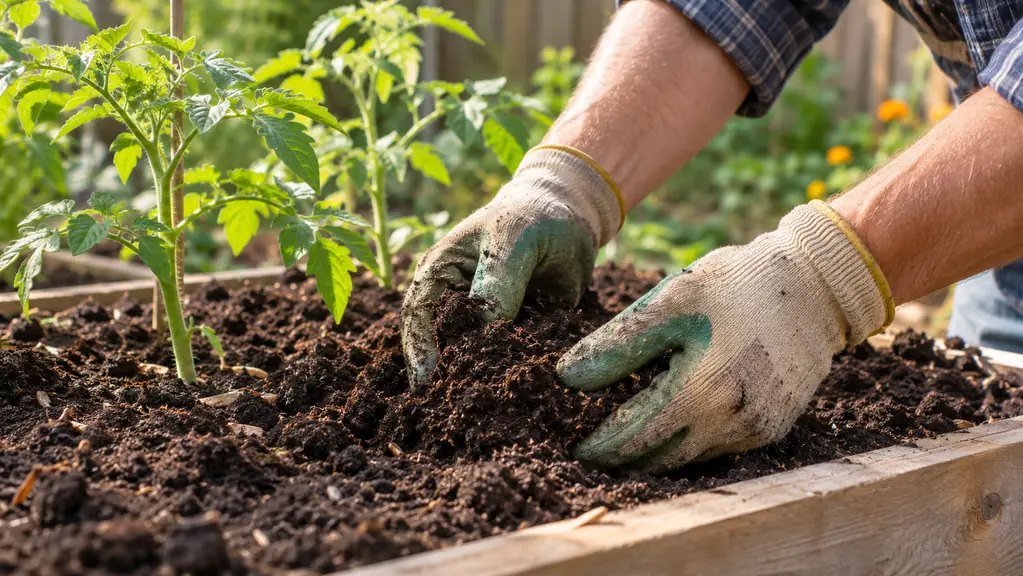
If you garden in raised beds the way I do, you have probably stood in the garden aisle with a bag of worm castings in each hand, wondering whether the price difference actually shows up in the soil. I am Hazel Whitford, and I have grown vegetables organically in the Arkansas Ozarks for about twenty years. My native soil is rocky red clay, so I build soil in raised beds, and for the last three seasons my main bag has been Wiggle Worm 100% Pure Organic Worm Casting Fertilizer. This past year I bought a bag of Brut Worm Castings to run them side by side. I want to be clear about how I tested, because garden writing is full of opinions that were never tested. I bought both bags in the same week last February, stored them in the same shed, and used them in the same beds, the same potting mix, and the same compost pile. My three Land Guard raised beds are six feet by three feet and a foot deep, and I have grown tomatoes, peppers, green beans, squash, kale, lettuce, and basil in them, with a strip of zinnias and marigolds along the edge for the pollinators. The beds sit above the rocky red clay that most of my yard is made of, so whatever I add to the soil stays where the roots can reach it. Here is what I found.
The short answer: both are real, honest worm castings, and both will feed a garden. But they are not the same product, and for my money, Wiggle Worm is the one I keep reaching for. It is finer, more consistent, and easier to work into seed starting mix and transplant holes. Brut is coarser and cheaper per pound, and it did a perfectly good job as a top dressing. If you mostly top dress established beds and want to save a few dollars, Brut is worth a look. If you start seeds, transplant, and want one bag that does everything well, Wiggle Worm wins. Let me also say what this comparison is not. It is not a laboratory test, and I am not going to pretend I measured nitrogen or humic acid content. I am a retired school nurse who gardens for the taste of a homegrown tomato and the quiet of a summer evening with a hoe in my hand. What I can give you is a season of side-by-side use, with the same hands, the same beds, and the same compost pile. I have started seeds indoors every March for the past six years, mostly tomatoes, peppers, and basil, so the seed starting test was the one I cared about most. If you are new to worm castings, here is the one thing to know: castings are not fertilizer in the baggy sense. They are soil conditioner first and a gentle feed second. That is why texture matters, because a conditioner has to mix with the soil to do its job. That is worth more to me than a spec sheet.
| Wiggle Worm | Brut Worm Castings | |
|---|---|---|
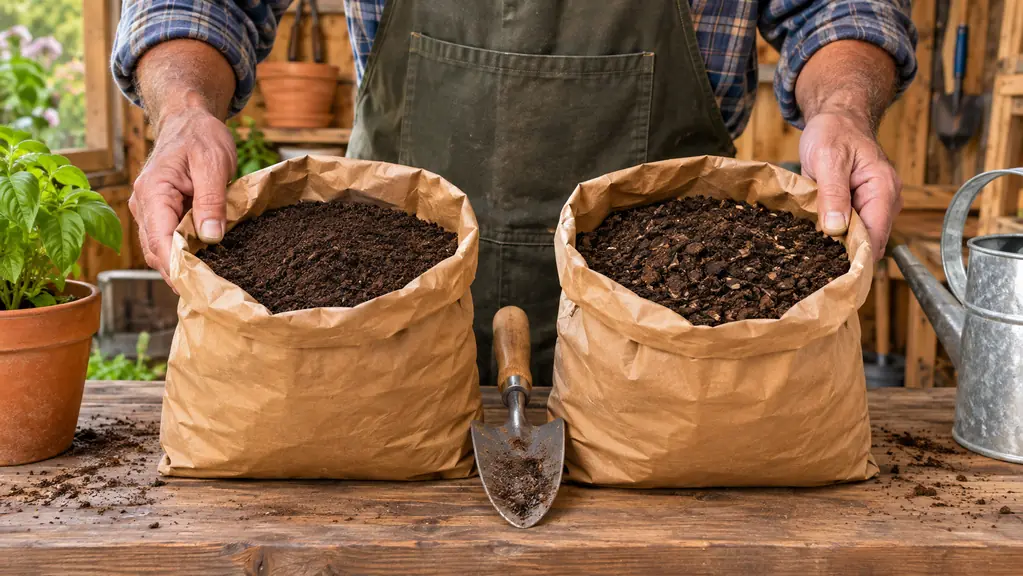
| Texture | Fine, uniform, football-shaped granules that mix smoothly into seed starting mix | Coarser, more variable chunks that sit on top of the soil |
| Smell | Earthy and mild, barely noticeable even indoors | Earthy but a bit stronger, fine outdoors, noticeable in a closed shed |
| Ease of use in seed starting | Mixes evenly, no clumps, seedlings come up clean | Clumps a little, needs sifting for fine mixes |
| Top dressing | Fine granules stay put and work into the soil surface easily | Coarser chunks break down slower, still effective |
| Price per pound | Higher, but the bag is OMRI listed and consistent bag to bag | Lower, easier on the budget for big beds |
| Best for | Seed starting, transplant holes, and gardeners who want one all-around bag | Top dressing established beds on a budget |
Where Wiggle Worm Wins
Wiggle Worm won me over in the seed starting mix, which is where texture matters most. The granules are described as tiny, football-shaped particles, and that is exactly what they look like: small, uniform, and light. That first spring I mixed a half-gallon scoop into a five-gallon bucket of my regular potting mix and filled three 72-cell trays with tomato and pepper seeds. The castings disappeared into the blend instead of settling into a layer at the bottom of the cells. Three weeks later, when the first true leaves showed, I did not have to pick chunks out of the way of a single stem. With the coarser bag I tried the year before, I spent a whole evening sifting before I dared use it on seedlings. That evening is the reason I now buy the fine bag without thinking. Seed starting is already a gamble in early March, when the light is weak and the house is dry, so the last thing I need is a bag of castings that fights the mix. I fill the trays on the kitchen counter with a cheap scoop I keep in the potting soil bin, and the fine granules pour like coarse flour. They do not cling to the scoop or clump when the mix gets damp. By the time the seedlings are up, the castings have done their quiet work and there is nothing left to pick out of the way.
It is also the easier bag to use for transplant holes, which is where I notice the difference most. My three Land Guard raised beds are six feet by three feet and a foot deep, and I set them up three springs ago to get above the rocky red clay. When I set out kale, lettuce, and squash, I use my Nisaku hori hori knife to open a hole, drop in a scoop of castings, and set the plant. Wiggle Worm's fine texture mixes with the native soil instead of sitting there as a lump. The bag is labeled OMRI listed, and after three seasons of using it alongside my own compost, my beds hold moisture better and my transplants settle in faster. One morning in late April, I set out twelve kale plants and six lettuce plants in the bed closest to the kitchen door. By the end of the week, every plant was standing straight and putting out new leaves. I cannot prove the castings deserve all the credit, but I can tell you I have not changed anything else. The 4.5 pound bag is easy for me to lift and pour, which matters because I have arthritis in my hands and a lower back that complains after a long day of digging. Dale helps with the heavy lifting, but the bag is light enough that I do not have to ask.
Where Brut Wins
I will give Brut its due: it won on price, and for a lot of gardeners that is the whole ballgame. If you are top dressing three big raised beds and going through a bag every couple of weeks, the lower price per pound adds up fast. I spread Brut around my green beans and squash on the second Saturday in May, right after a good rain, and the soil drank it in. It broke down more slowly than Wiggle Worm, which is not necessarily a bad thing in a top dressing, and the earthworms in my beds did not seem to care which brand arrived. By early June the bean rows were full and green, and I could still see a few coarse chunks on the surface doing their slow work. For that job, slow is fine. A top dressing is supposed to feed the soil over weeks, not hours, and Brut does exactly that. If I had a big flower border instead of three modest raised beds, I might keep a bag of Brut on hand just for scattering on top and walking away. The price difference is real, and I do not want to wave it away. When you are feeding a whole vegetable patch, the cheaper bag lets you be generous with the scoop, and generosity is its own kind of soil building.
Where Brut lost me was the seed starting tray, and I want to be fair about how I tested it. In early March I mixed Brut into a small batch of potting mix the same way I mix Wiggle Worm, one scoop to a bucket. The chunks did not blend in. They sat on top of the mix, and when I watered, a few floated up around the seedlings. I tried sifting it through a half-inch hardware cloth, which helped, but it cost me an evening and left a pile of fines I had to store. For a gardener who starts a hundred seedlings every spring, that extra step is the difference between a pleasant chore and a frustration. Brut also worked fine in the compost pile, where I did not need a fine texture. I keep a VIVOSUN dual-chamber tumbling composter near the kitchen door, one chamber cooking while I fill the other. Over the summer I tossed a few handfuls of Brut in with the kitchen scraps and shredded leaves, and it disappeared into the pile like any good castings should. The tumbling action broke up the coarser chunks faster than I expected, which tells me the product is honest material, just ground more coarsely than Wiggle Worm. So my honest verdict is that Brut is a good product for the right job, just not the job I do most often.
The fine-textured bag that does everything: seed starting, transplant holes, top dressing
Wiggle Worm 100% Pure Organic Worm Casting Fertilizer is the bag I buy every spring. Fine granules, OMRI listed, and easy to work into any mix.
Amazon Check Today's Price on Amazon →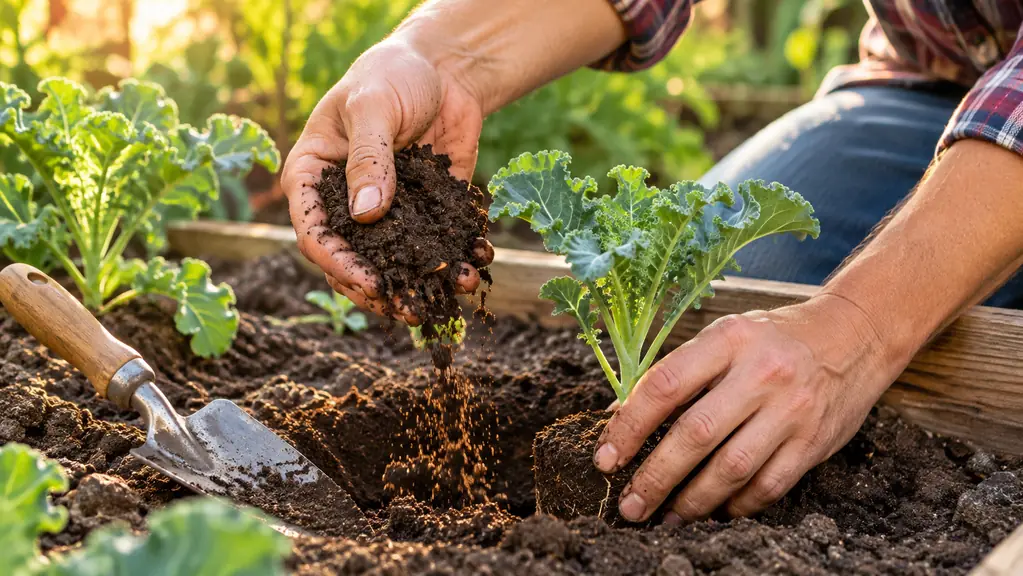
Who Should Buy Which
Buy Wiggle Worm if you start seeds, plant transplants, or want one reliable bag that works everywhere. The fine, uniform texture makes it the easiest castings I have used for mixing into potting soil and settling into transplant holes, and the OMRI listed label matters if you garden organically. It costs more per pound, but you use less of it in the places where texture counts, so the gap is smaller than the shelf price suggests. I have arthritis in my hands, and the fine granules pour out of the bag without clumping, which means I do not have to break up lumps with my fingers before I can use them.
Buy Brut if you mostly top dress established beds, feed the compost pile, and want to stretch your dollar. It is honest castings at a better price, and for those jobs the coarser texture is a non-issue. What I would not do is buy Brut for seed starting and then blame the castings when the mix clumps. Match the bag to the job, the way you match any tool to the work. If I had a big flower border instead of three modest raised beds, I might well keep a bag of Brut on hand for the times I just want to scatter a little something on top and walk away.
One more thought on the buying decision. My husband Dale helps with the heavy lifting, but the garden is mine, and I am the one who fills the trays and sets out the transplants. That means the bag that saves me time and spares my hands is worth real money to me. A 4.5 pound bag of Wiggle Worm carries me through a season of seed starting and transplant holes, with enough left for a top dressing. If you are starting a hundred seedlings like I do, buy the fine bag. If you are feeding an orchard or a big vegetable patch, buy the economical bag and do not look back. And if you are still deciding, here is the simplest test I know: open both bags and run a handful through your fingers. The one that feels like good garden soil is the one you will reach for on a busy April morning. The one that feels like gravel is the one you will leave in the shed. That is not a scientific test, but it has never steered me wrong.
For my money, the fine, consistent texture of Wiggle Worm is worth the difference at seed starting time, and the OMRI listed label makes it the bag I trust for everything else.
The bag I buy every spring: fine granules, OMRI listed, one bag for the whole season
Wiggle Worm 100% Pure Organic Worm Casting Fertilizer has been my main bag for three seasons. If you start seeds or set out transplants, start here.
Amazon Check Today's Price on Amazon →