
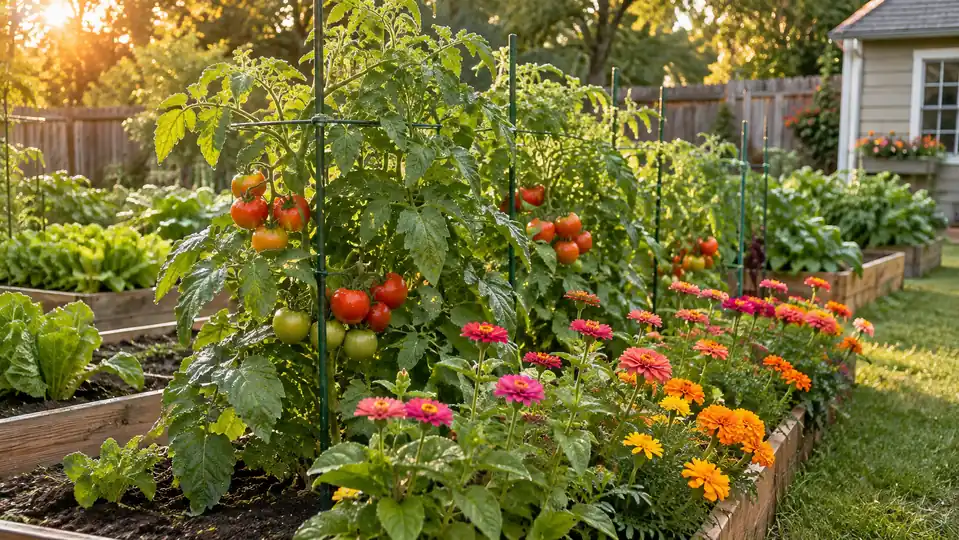
Every spring I tell myself the same thing: this year I'll build better soil instead of just feeding plants. Then the tomatoes go in, the squash bugs show up, and I'm back to doing what's easiest. What's easiest, I've learned after three seasons of using Wiggle Worm castings, is also what's best for the soil. That's not a sentence I expected to write about a bag of worm manure.
I'm Hazel Whitford. I've gardened organically on a half-acre lot in the Arkansas Ozarks for about twenty years, mostly in raised beds, because the native soil is rocky red clay. My husband Dale does the heavy lifting; the garden is mine. I've used Wiggle Worm pure worm castings for about three seasons now, in seed starting mix, in transplant holes, and as a top dressing, always alongside my own compost. This review is what those seasons taught me.
The Quick Verdict
A genuinely useful soil amendment that earns its place in my seed starting mix and transplant holes. It didn't transform the garden overnight, but it made my soil easier to work and my transplants noticeably happier. I'll keep buying it.
Amazon Check Today's Price →The soil amendment I reach for every seed-starting season
Three seasons in, Wiggle Worm castings are a regular part of my routine. If you garden in tired soil or start seeds indoors, this is a good place to start.
Amazon Check Today's Price on Amazon →How I've Used It
If you're new to castings, the short version is this: worm castings are what worms leave behind after digesting organic matter. They're mild, they improve soil structure, and they feed soil life without burning roots. I use them the way I use a good kitchen knife, not for every job, but for the jobs where precision matters.
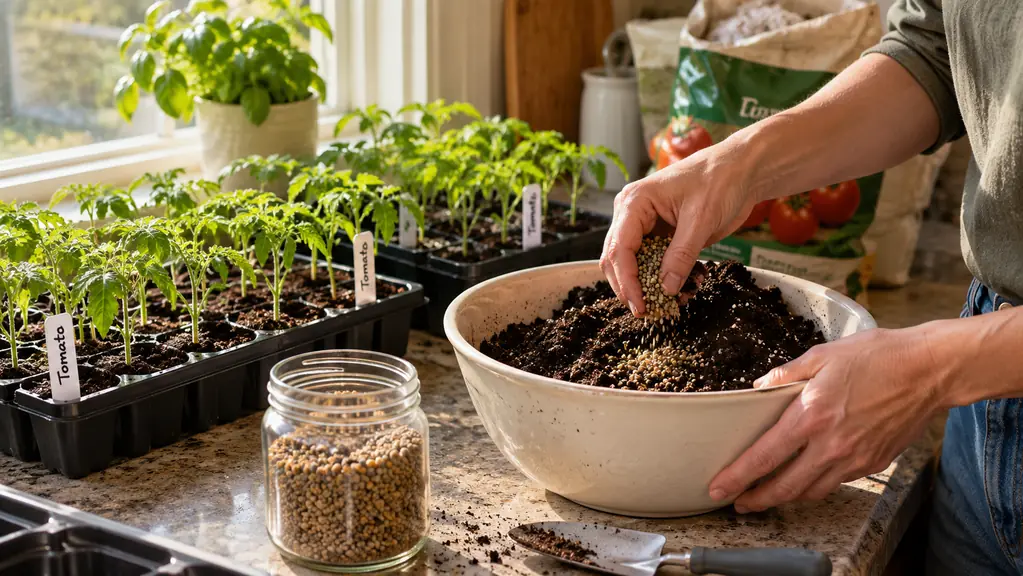
The short version: I use Wiggle Worm castings in three places. I mix them into my seed starting blend at about one part castings to four parts soilless mix. I put a handful in every transplant hole before I set out tomatoes, peppers, and squash. And a few times a season I sprinkle a thin layer over the soil around established plants and water it in. That's it. No measuring cups, no schedule I have to think about.
I keep a bag in the garage with my other soil supplies and fill a small tin for the potting bench. The granules are tiny and football-shaped, which sounds like a silly detail until you've worked with them. They pour easily, mix easily, and don't clump into a crust the way some bagged soil products do. They also don't smell like much of anything, which surprised me pleasantly. The first bag I opened, back in early March of that first season, I braced for the same barnyard smell my compost pile gives off. There wasn't any. I mixed a scoop into my seed starting blend, filled my trays, and labeled the rows with a grease pencil, the same way I've done every spring since. It took me about ten minutes from opening the bag to having sixty cells planted.
I started using castings because my seed starts were getting leggy and I wanted something gentler than synthetic fertilizer. My own compost is great for the garden beds, but it's still too coarse and active for tender seedlings. Castings fit that middle spot: mild enough for a two-inch tomato seedling, useful enough to actually matter.
What Castings Actually Do (and Why I Trust the Label)
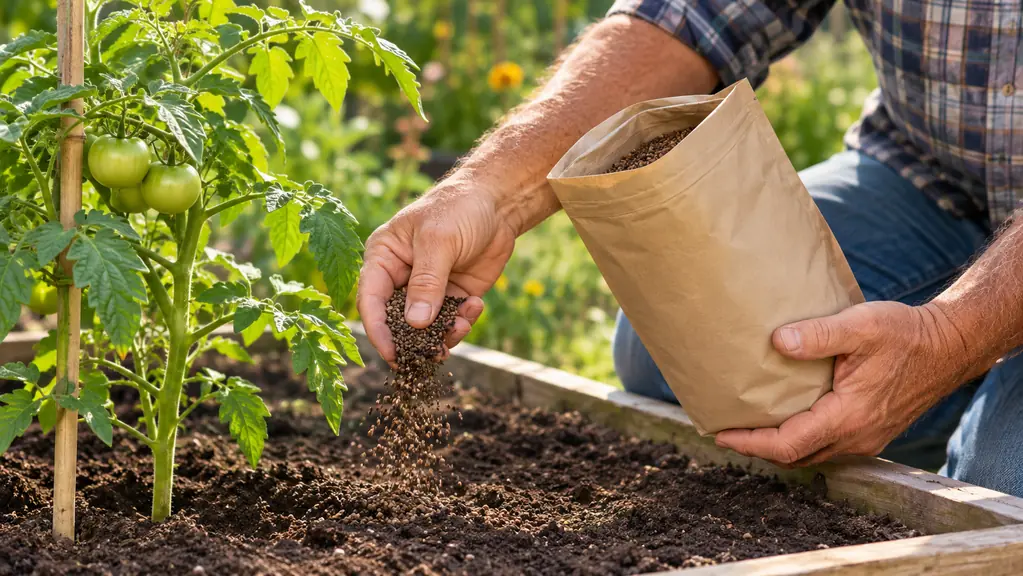
Here's what I've come to understand after using them. Worm castings are not a fertilizer in the way a bag of 10-10-10 is a fertilizer. They're a soil conditioner. The Wiggle Worm label says the specific use is soil conditioning, and it's OMRI listed organic, which matters to me because I don't want to guess about what's in the bag.
The real value, as far as I can tell, is in the soil structure. The granules are tiny, football-shaped particles, and when you work them into soil they help with aeration. My clay soil wants to compact into something resembling concrete by August. Adding castings, along with compost and mulch, keeps the soil loose enough that my Nisaku hori hori knife slides in without me putting my back into it.
The nutrient side is real but modest. The label calls the castings nutrient-rich and mineral-dense, but they won't give you the jolt you'd get from a synthetic fertilizer. That's the point. They release slowly, they feed soil life, and they don't burn roots. For a gardener building soil for the long haul, that's exactly what I want.
I'll be honest about why the OMRI listing matters to me. I garden organically, and I've bought plenty of products over the years that turned out to be mostly filler. With castings, the label is the product: 100% pure castings, nothing else. The bag says it plainly, and the granules look like what they are. There's no guesswork.
How My Plants Responded Over Three Seasons
I'm careful not to overclaim, because I changed other things at the same time: more compost, more mulch, no more tilling. But I can tell you what I observed. My seed starts came up stockier. The tomatoes I set out with a handful of castings in the hole settled in faster, with less wilting in the first week, than the ones I planted in plain soil.
The peppers were the clearest difference. I have a raised bed where the soil had gone tired after a few seasons of heavy feeding. The summer I started top dressing with castings, the plants looked greener and held their leaves longer into the fall. I remember one afternoon in late July, walking out expecting the usual three o'clock droop, and finding the leaves still standing, dark green and firm. I checked the soil with my finger and it was still cool an inch down, which told me the mulch and the organic matter were doing their job. That could be the castings, the compost, or the fact that I finally got serious about watering consistently. I suspect it's all three working together.
The most useful effect might be the least dramatic. The soil in my beds is easier to work now. It crumbles instead of clumping. A trowel goes in without a fight. For someone with arthritis in her hands and a lower back that complains, that alone is worth the price of a bag.
The fall garden showed it too. My kale and lettuce went in later than I like, but they came up fast and stayed healthy into November. I can't prove the castings did that. I can tell you that the bed where I used them looked better than the one where I didn't, and that's the kind of evidence I trust.
How I Apply It (and What the Label Says)
The Wiggle Worm label suggests applying the castings above the root zone three times a year, or putting them in the hole at planting time. I do both, in my own loose way. In early spring I work a thin layer into the top few inches of each bed. At planting I add a handful to each hole. In midsummer I top dress again, right before a rain if I can manage the timing. Last July I watched the forecast for three days, sprinkled the beds one evening, and the rain came the next morning. The castings washed in without me hauling the hose around the yard. That kind of timing is luck, but I'll take it. On the years when no rain comes, I water the top dressing in myself with a gentle spray so it doesn't just sit on top.
The bag lists coverage as 'half,' which I read as a hint that this is not a product you slather on. A little goes a long way. A 4.5-pound bag, at 260 cubic inches, lasts me a good while because I use it where it counts: seeds, transplants, and the plants that need a gentle boost. For a full garden of heavy feeders, you'd want more, and you'd probably want to pair it with compost, which is what I do.
One note on the packaging: the included components are one bag, and the item weight is 1.88 kilograms. That's the whole product, no surprises. The granules are dry enough to pour easily and store well. I keep mine in a sealed bin in the garage, and it's still fine at the end of the season.
One mistake I made the first season: I mixed castings into the bottom of the hole and set the plant directly on top of them, the way you might with a handful of fertilizer. The roots were fine, but I've since learned to mix the castings into the backfill soil instead. The label says to apply above the root zone, and that's the better way. The worms and soil life do the rest.
Castings vs. My Own Compost (and Why I Keep Both)
People ask me why I buy castings when I make my own compost. Fair question. My compost is wonderful stuff, but it's not the same tool. Compost is bulk: it builds the whole bed, feeds the soil food web, and improves structure across a wide area. Castings are more concentrated and more consistent. A handful in a transplant hole does a different job than a wheelbarrow of compost spread over a bed.
There's also a consistency issue. My compost varies by season. Some batches are rich, some are mostly leaves, some are still breaking down. I run a VIVOSUN dual-chamber tumbling composter now, and it helps, but the two chambers are rarely ready at the same time. One side might be fine in June while the other is still full of coarse stuff I'd rather not put around seedlings. The castings bag, by contrast, is dependable in a way my own pile never quite is, and dependability is what I want in March.
So I keep both. Compost for the beds, castings for the moments that need precision. They're not competing products. They're two tools in the same soil-building system.
The Tradeoffs (Being Honest)
Here's what I'd tell a friend before she buys. Wiggle Worm castings are not cheap per pound compared to synthetic fertilizer. They're also not a complete fertilizer. If your plants are starving and yellow, castings alone won't fix that quickly. You need compost, or a balanced organic fertilizer, or both. Castings are the soil builder, not the rescue squad.
The other tradeoff is the bag size. The 4.5-pound bag is convenient for seed starting and transplanting, but if you have a big vegetable garden with heavy feeders, you'll go through it quickly. I buy a couple of bags a season and use them strategically: seed starting mix, transplant holes, top dressing for the plants that need it most.
And I should say plainly: I don't think castings are magic. They didn't cure my squash vine borers, and they didn't make my tomatoes sweeter. What they did was make my soil better, slowly and steadily. That's a quieter result, but it's the one that lasts.
What I Liked
- OMRI listed organic, so I know what I'm putting in my soil
- Gentle enough for seed starting mix and transplant holes
- Improves soil structure and aeration, especially in clay
- Easy to apply: pour, mix, water, done
- No odor, pours easily, stores well
Where It Falls Short
- Expensive per pound compared to synthetic fertilizers
- Not a complete fertilizer; plants still need compost or a balanced feed
- 4.5-pound bag goes fast if you garden in volume
The most useful effect might be the least dramatic. The soil in my beds is easier to work now. It crumbles instead of clumping.
Who This Is For
Buy Wiggle Worm castings if you start seeds indoors and want something gentler than synthetic fertilizer. Buy them if you set out transplants and want them to settle in without shock. Buy them if your soil is tired or compacted and you're willing to think in seasons, not weeks. The label says they're excellent for houseplants, vegetables, flowers, and more, and I've used mine on vegetables and herbs with good results.
And buy them if you garden organically and want an OMRI listed product you don't have to second-guess. If you're already making good compost, castings are a complement, not a replacement. I use both. Compost feeds the garden in bulk; castings go where they're needed most, at the moments that matter.
I've also used them on houseplants, since the label says they're excellent for houseplants, vegetables, flowers, and more. A thin sprinkle on top of the potting soil, watered in, keeps a tired houseplant going through the winter. It's a small thing, but it's nice to have a product that works indoors and out.
Who Should Skip It
Skip the castings if you're looking for a quick green-up. A balanced organic feed or a synthetic fertilizer will give you faster, more visible results. Skip them if you garden in large beds and expect one 4.5-pound bag to cover everything. You'll run out and feel cheated. And skip them if you're not already building soil in other ways. Castings are a tool in a system, not a shortcut around it.
I say that as someone who bought the bag hoping for a shortcut and learned the lesson the slow way. The garden got better because I kept adding compost, kept mulching, kept watering consistently, and used castings where they'd do the most good. The castings helped. They just didn't do it alone.
Three seasons in, this is still the bag I reach for
If you're starting seeds or setting out transplants this season, Wiggle Worm castings are a solid addition to your soil routine. See today's price and decide for yourself.
Amazon Check Today's Price on Amazon →