
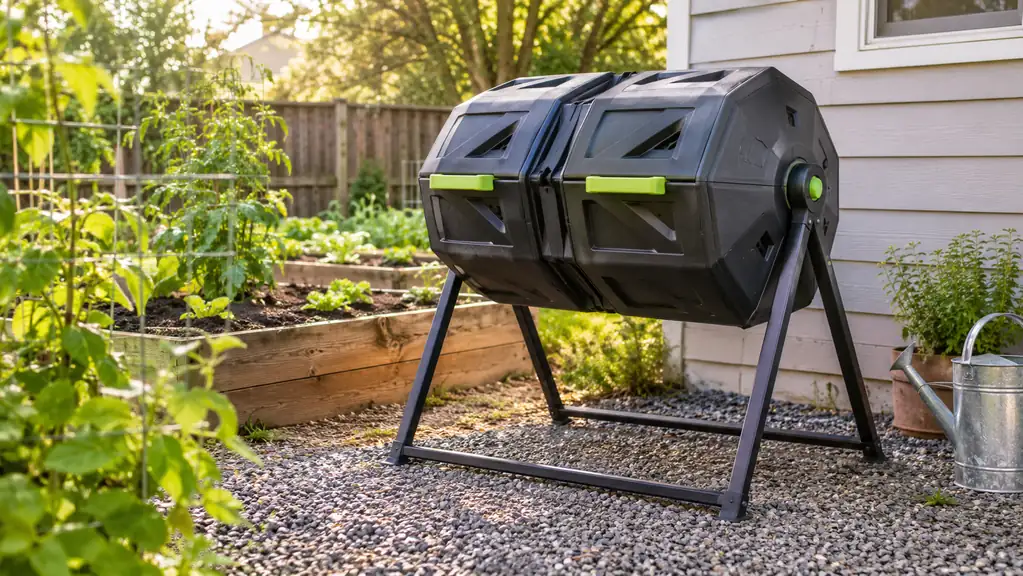
I bought my VIVOSUN dual-chamber tumbling composter two years ago, after a decade of fighting an open pile in the corner of my half-acre lot. The pile worked, in the sense that things eventually rotted. But it took a year to make anything usable, it drew every raccoon in the Arkansas Ozarks, and turning it with a pitchfork left my lower back complaining for days. I was 59 then, with mild arthritis in my hands, and I had finally admitted that a good compost system has to be one I can actually manage.
So when I say this is an honest review, I mean it in the plain sense. I have used this tumbler through two full gardening seasons, in heat, ice, and the kind of spring rain that turns red clay into glue. I have made good compost with it, and I have made a soggy mess with it. Both results were partly my fault, but a few of the frustrations were built into the design. Here is what I wish someone had told me before I clicked buy.
The Quick Verdict
The best compost setup I have had in 20 years of gardening, as long as you understand it is a tool with limits, not a machine that does the thinking for you.
Amazon Check Today's Price →A composter that actually gets used
Two chambers, a rotating drum, and a spot by the kitchen door. That combination finally made composting a habit in our house instead of a chore.
Amazon Check Today's Price on Amazon →How I've Used It
The composter sits near the kitchen door on a patch of gravel I leveled myself. That location matters more than any feature on the machine. For years my pile sat at the far edge of the property, and the walk was just long enough that kitchen scraps stayed in a bowl on the counter until I lost patience with them. Now the scraps go out the door every evening. The tumbler measures 26.25 inches long, 23.6 inches wide, and 36.5 inches tall, so it tucks against the wall without blocking the path.
I keep one chamber cooking while I fill the other. That is the whole point of the twin design, and it works exactly as described. When the second chamber is full, I stop adding to it and let it work while I start filling the first one again. By the time the second chamber is ready to empty, I have a fresh batch going. Two years in, I have not once had to dig out a half-finished pile to make room for new scraps.
The waterproof gloves that came with it were a small surprise. I expected the kind of thin throwaway pair that tears the first time you grab a stick. These have lasted two years, and they are the pair I reach for on wet mornings when I do not want cold hands before coffee.
The routine is simple. Every evening, the kitchen scraps go in whichever chamber is filling. Every few days, I give the drum a few turns. Every couple of months, I empty a finished chamber into a wheelbarrow and spread it on the beds. The whole system takes maybe five minutes a day, which is the only kind of system that survives a busy gardening season.
Assembly and First Impressions
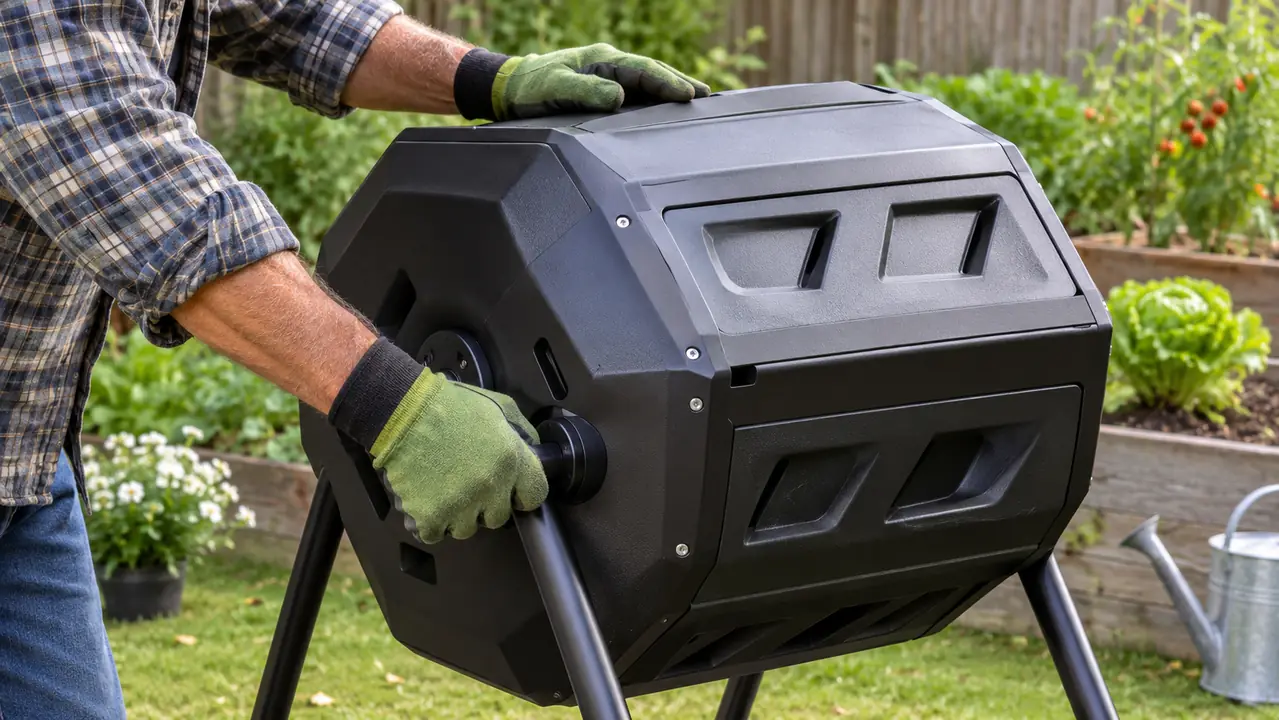
The box arrived flat, and assembly took me about an hour working alone with a wrench and a screwdriver. The instructions were clear enough that I did not have to call Dale over, which is my usual test for garden equipment. The panels bolt together, the drum sits on the frame, and the whole thing felt solid by the time I finished. My one note: lay the parts out on a tarp before you start, because the hardware comes in one bag, and it is easier to sort it before you begin than to hunt for the right bolt halfway through.
The first thing I noticed was the weight. At 21.7 pounds empty, the composter is light enough to move around the yard if I need to, but I have not needed to. It has stayed in the same spot near the kitchen door since the day I assembled it. The octagonal drum gives it eight flat panels, and each panel carries one of the deep fins that lift the compost as the drum turns. That shape is not decoration; it is how the tumbling works. The whole unit is compact enough that it does not dominate the yard, which matters on a half-acre lot that already holds three raised beds and Dale's shed.
What Works: The Twin Chambers
The twin chambers are not a gimmick. With a single bin, every new addition of kitchen scraps resets the whole pile, so you are always waiting on the newest layer. With two chambers, you separate the active pile from the finishing pile. One side gets every scrap, weed, and chopped leaf for a month or two, and then it gets left alone to finish while the other side starts collecting. That separation is what turned composting from a yearly chore into a steady rhythm.
The 43-gallon capacity is right for a household of two with a vegetable garden. We fill one chamber in about six to eight weeks, depending on the season. In summer, when the squash and tomatoes are producing and the kitchen is busy, it fills faster. In winter, it takes longer, and I add more shredded paper and dry leaves to balance the kitchen scraps.
The galvanized steel has held up. The composter has sat through two Arkansas summers, two winters, hail, and a spring that flooded the yard, and the frame and panels still work the way they did the day I assembled them. I cannot say that about the wooden bins I used before.
What Works: Turning Without Turning
The rotating design means I never dig or mix the pile by hand. The deep fins on the eight panels lift the material as the drum turns and drop it back down, which aerates the compost the way a pitchfork would, but without the bending and twisting that my back cannot take anymore. I give it three or four full rotations every couple of days, usually when I am already outside checking the tomatoes. That is the whole maintenance routine.
Because the drum sits off the ground, the critter problem mostly disappeared. The raccoons that used to redecorate my open pile every fall have not figured out the door, and the sealed drum keeps the smell down. That alone was worth the switch. I still see the occasional possum sniffing around at night, but they move on when they find nothing to tip over.
What Does Not Work: The Honest Part
Now the part I did not expect. The door does not always want to seat on the first try. It takes a firm push, and sometimes a second or third attempt, to get it settled properly. If you do not get it seated well, material works its way out as the drum turns and leaves a line of compost on the gravel. I have learned to check the door before every rotation. It is a small thing, but it is a daily thing.
A full chamber is heavy. The composter itself weighs 21.7 pounds empty, and 43 gallons of damp, half-finished compost weighs considerably more. Turning a full chamber takes real effort, and emptying a finished one is a two-person job in our house. I usually pull the finished compost out in stages with a small trowel rather than trying to dump the whole chamber at once.
The tumbler does not do the thinking for you. It still needs the same balance of greens and browns as any pile. Too many kitchen scraps and not enough dry leaves, and you get a wet, sour ball that stops breaking down and starts smelling. The fins help, but they cannot fix a bad ratio. I learned this the hard way in my first summer, when I filled a chamber with melon rinds and grass clippings and nothing else.
The included gloves are fine for everyday work, but they are not heavy gloves. For thorny pruning or handling rough stalks, I still use my own pair. Treat the included pair as a bonus, not a replacement for your good gloves.
What I Liked
- Twin chambers let one batch finish while the next one fills
- Rotating drum means no digging or hand mixing
- Galvanized steel has lasted two full years outdoors
- 43-gallon capacity fits a two-person household with a garden
- Sits close to the house, so it actually gets used
- Waterproof gloves included
Where It Falls Short
- Door needs a firm push to seat properly
- A full chamber is heavy to turn and to empty
- Still needs the right balance of greens and browns
- Finished compost takes weeks longer than advertised
- Not for coarse garden waste like stalks and branches
Two years in, the honest verdict is simple: the twin chambers changed my composting habits more than any tool I have owned, and the door is the small price I pay for that.

Two Years In: How It Holds Up
The moving parts are the thing to watch. After two years outdoors, the rotation is a little stiffer than it was new. A squirt of food-safe lubricant on the moving points each spring has kept it working smoothly, and I expect to keep doing that. The galvanized panels still look good, the fins are intact, and the chambers still seal well enough to keep the smell down. I also hose the outside down once or twice a year, mostly to keep the gravel underneath from turning into a compost stain.
The only cosmetic change I have noticed is that the door has faded some in the sun. That does not affect how it works. If you want a composter that looks new forever, you will be disappointed. If you want one that makes compost for years, this VIVOSUN will do that.
The Compost Itself
Finished compost takes longer than the listings suggest. In our climate, a chamber left alone in warm weather gives usable compost in about eight to twelve weeks, not the few weeks that some product pages imply. In cool weather it takes longer. Patience is part of the system, and I wish the marketing said so plainly.
The finished product is worth the wait. It comes out fine, dark, and crumbly, and it smells like good soil instead of rot. I use it in the raised beds where I grow tomatoes, peppers, green beans, squash, kale, lettuce, and basil, and I can tell the difference in the soil every year. The beds sit above the native red clay, and the compost is what makes them work.
I still keep a small open pile for the coarse stuff: corn stalks, thick stems, and woody prunings. The VIVOSUN tumbler is not a shredder, and it does not pretend to be. Kitchen scraps, eggshells, coffee grounds, shredded paper, and chopped leaves all go in the tumbler. The rough garden waste goes in the pile. Between the two, nothing from the garden goes to the landfill.
What Nobody Tells You
Nobody tells you that the best compost system is the one you will actually use. The marketing talks about rotation, aeration, and balanced carbon to nitrogen ratios. All of that matters. But the reason this VIVOSUN composter worked for me is that it sits three steps from the kitchen door, and the reason it still sits there is that the twin chambers forgive a busy week. When I am canning tomatoes in August and do not touch the tumbler for ten days, the cooking chamber does not punish me. It just keeps working.
Nobody tells you that you will still talk to your compost. I check the moisture by feel, add a handful of dry leaves when it is too wet, add a splash of water when it is too dry, and give the drum a few turns. It is not a machine you set and forget. It is a tool that makes the old work easier, and that is a different promise.
And nobody tells you that the best moment is not the first batch. It is the third or fourth batch, when you stop measuring and start knowing. You know how full the chamber should look, how the drum should feel when the mix is right, and what the finished compost should smell like. That is when the composter stops being a gadget and becomes part of the garden. That took me about a year.
Who This Is For
This composter is for the home gardener who cooks every day and wants the scraps to become soil instead of trash. It is for people with back trouble who need to avoid pitchfork work, because the drum does the turning. It is for gardeners who want a steady supply of compost rather than one pile that is ready all at once. If you have a vegetable garden, a kitchen, and a patch of ground near the door, the VIVOSUN tumbler fits the way you actually live. It fits the way I actually live, and I am picky about that.
Who Should Skip It
If you generate more waste than 43 gallons can hold, you will still need a pile or a second system, and a tumbler alone will not keep up. If you want set-and-forget, this is not that machine; it needs the right mix and a rotation every few days. If most of your waste is woody, you need a chipper or a slow pile, not a tumbler. And if you cannot manage the weight of a full chamber, have a plan for emptying it in stages or with help. None of that makes it a bad composter. It just means being honest about what you are buying, which is exactly what I am trying to be here.
The same setup I have used for two years
If you are tired of a pile that takes a year and a pitchfork, the VIVOSUN tumbler is worth a look. Just go in with your eyes open about the door and the weight, the way I am being honest with you here.
Amazon Check Today's Price on Amazon →